English
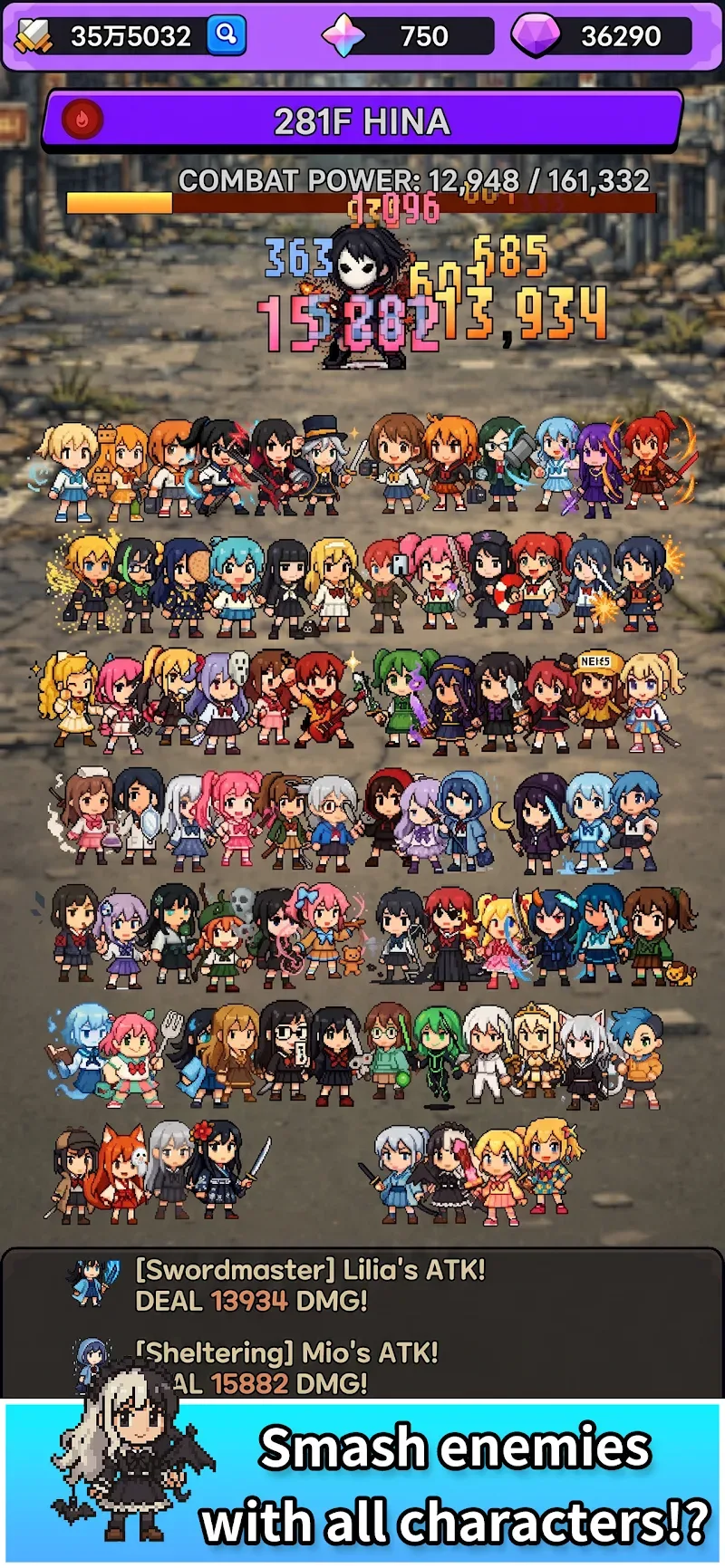
Tokyo After School Pixel Blade drops you into bite-sized, arcade-style pixel combat where smart preparation matters more than twitch reflexes. In this idle-auto battler you assemble a team, set formations and skills, then watch automated fights play out while your roster gains strength between sessions. The game blends quick, replayable encounters with a gacha-style reward loop and fragment collection for limited characters, making it appealing to players who prefer strategic planning and short bursts of play rather than long, repetitive grinding.
The core loop in Tokyo After School Pixel Blade centers on team composition and tactical setup. You do not directly control every attack; instead, you choose which characters to bring, assign formation positions and select passive or triggered abilities that influence how the AI-controlled combatants behave. Battles are fast and designed to resolve in a few minutes, so each run encourages experimentation with different character synergies and counter-formations. Encounters scale in difficulty through increasingly challenging enemy waves and specific stage modifiers, which keep the tactical layer meaningful as you progress.
Controls are intentionally simple to suit short-session play: menu navigation, roster management and upgrade screens are touch-optimized, while combat requires no complex input because fights run automatically. The interface focuses on clarity, showing cooldowns, buff/debuff icons and a compact summary of each character’s role so players can make informed choices quickly. Accessibility options include adjustable text size and clear iconography to help with readability on small screens, and the pacing allows players to pause and return without losing momentum.
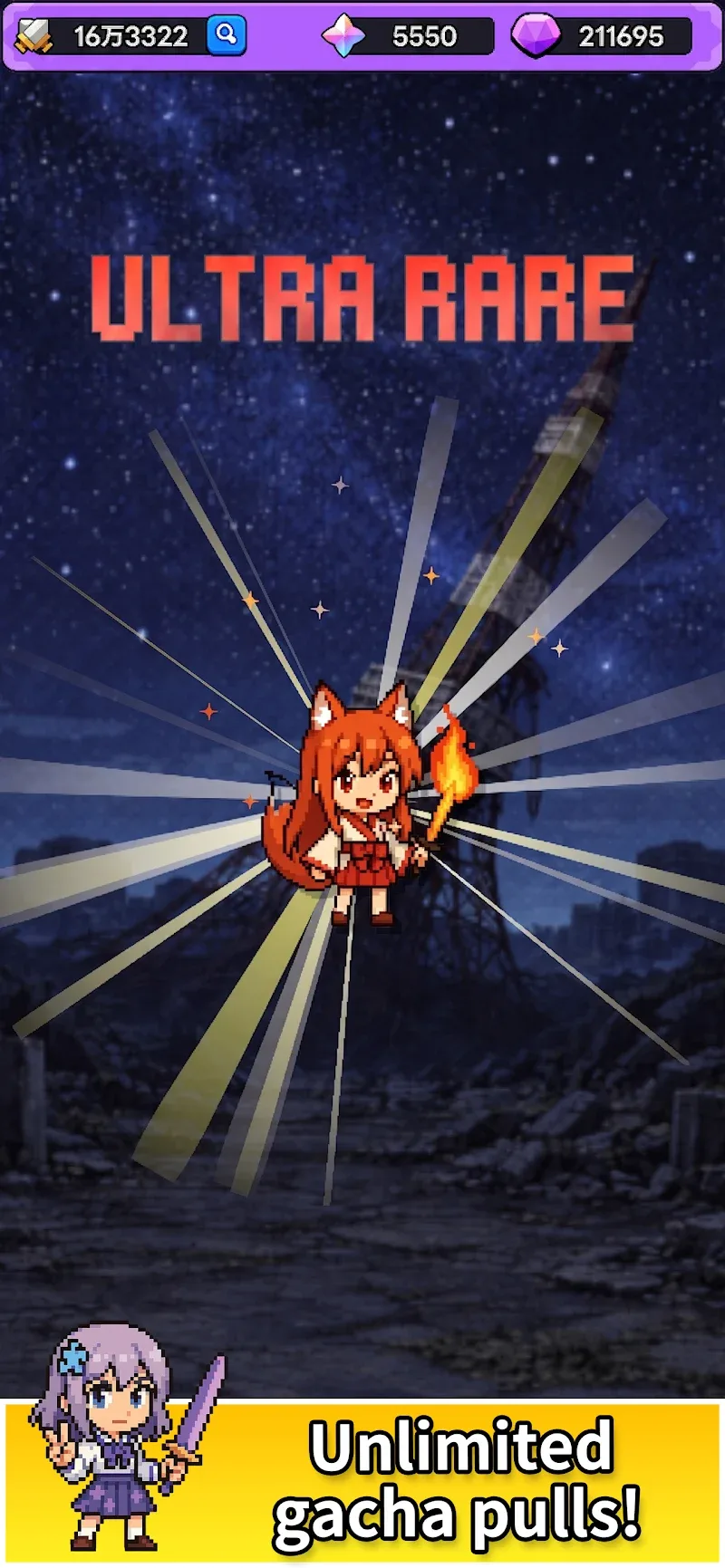
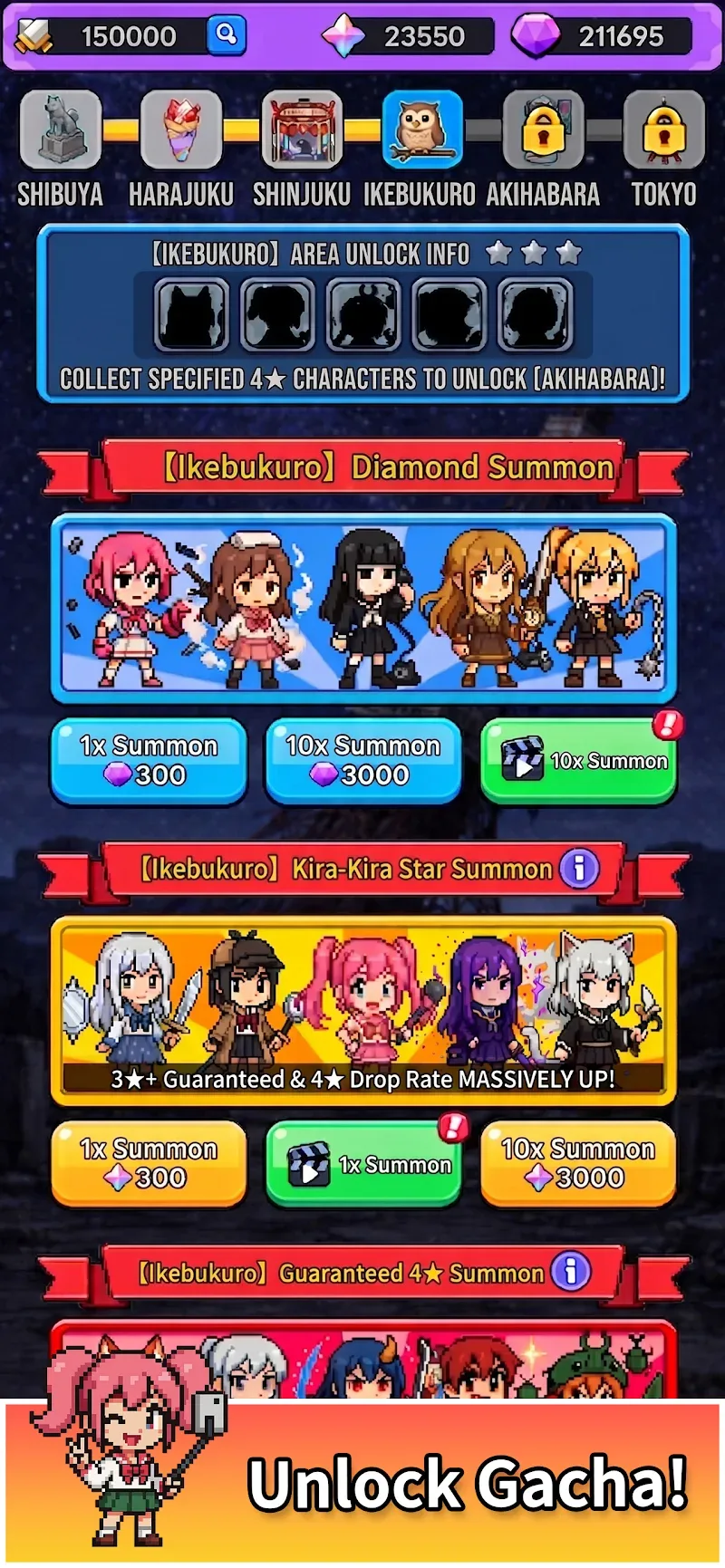
Progression relies on both active decisions and passive growth. Winning runs grants experience, materials and currency that strengthen individual heroes and improve overall team power. Idle mechanics let characters absorb power over time even when you’re not actively playing, reducing the need for continuous grinding. The gacha system provides random rewards and fragments; fragments accumulate toward unlocking or upgrading limited characters, encouraging steady play rather than single-session dependency. The game makes its odds and upgrade paths understandable so players can plan how to spend resources toward specific goals.
Visually, the title uses compact pixel art with readable animations that emphasize each character’s attack patterns and special effects without overwhelming the screen. Stages are structured into short missions and longer challenge stages that appear periodically to test optimized teams. Enemies come in distinct archetypes that telegraph behavior—ranged, tank, support—so you can adapt formation choices accordingly. Backgrounds and character sprites retain retro charm while presenting clear visual feedback for damage, status changes and ability activation.
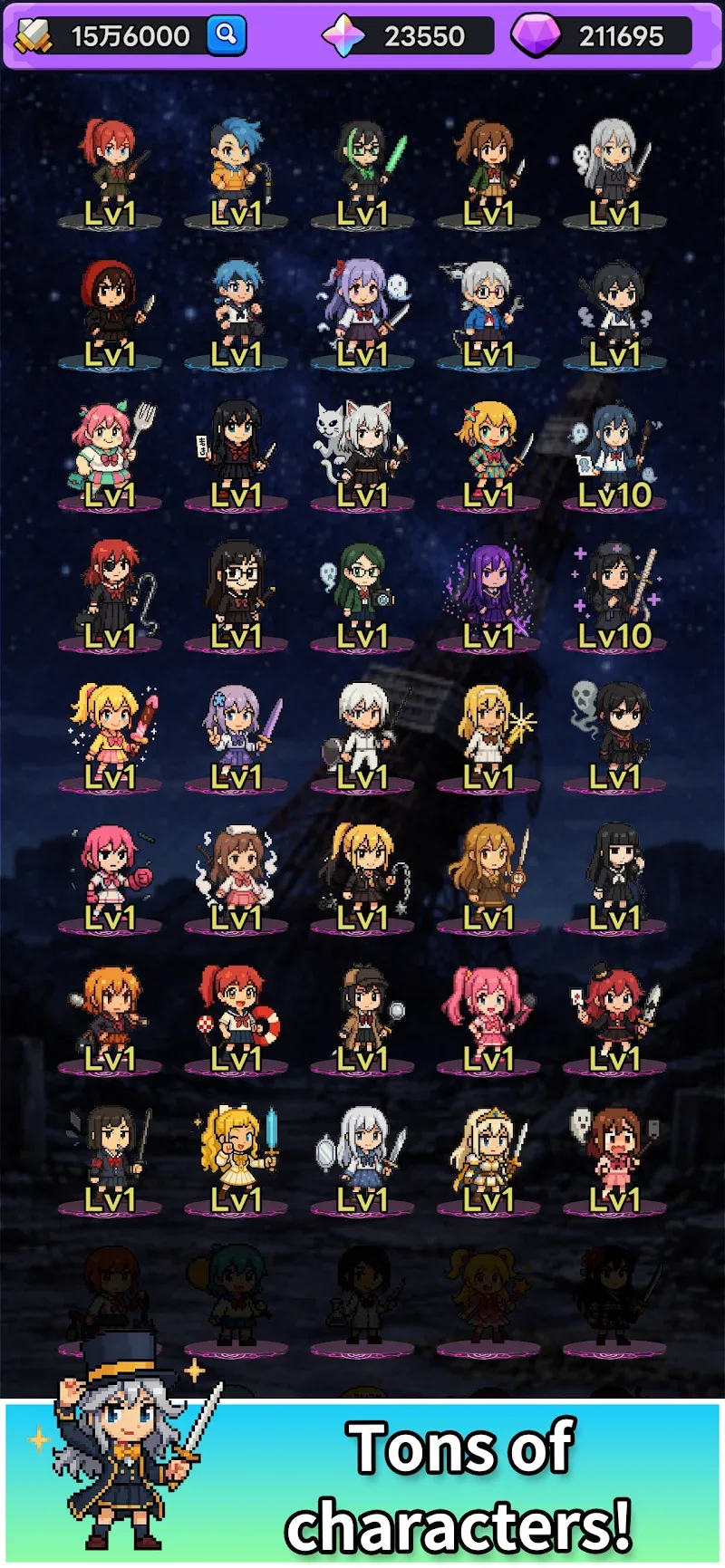
Customization focuses on meaningful choices rather than cosmetic clutter. You collect and upgrade equipment, assign fragments to unlock skills, and rearrange formations to exploit enemy weaknesses. Building a balanced roster and fine-tuning synergies between characters reward observation and planning. Because active control in battle is limited, customization and pre-fight setup are the primary levers for turning a close loss into a win.
Replayability comes from short, repeatable runs, rotating gacha rewards and a ladder of challenge stages that require optimized team builds. Daily objectives, time-limited events and fragment-focused milestones provide ongoing goals. Challenge stages introduce modifiers or restrictions that test your ability to adapt strategies rather than simply accumulate power, so even veteran players will find room to refine formations or chase specific character builds.
Some progression elements continue to advance while you're offline, which makes the game friendly to intermittent play, but certain event-related content and gacha interactions may require occasional connectivity to synchronize rewards. The design favors accessibility, with short sessions, clear tutorials and automatic combat that lowers the barrier-to-entry for new players. Trade-offs include reduced moment-to-moment control during fights and the inherent randomness of gacha draws, which can lead to variability in how quickly a desired character is obtained.
Tokyo After School Pixel Blade offers a compact, strategy-first take on idle auto-battlers with collectible progression and short, engaging runs. Expect to spend time experimenting with formations, collecting fragments for limited characters and pushing through increasingly demanding stages as your roster grows. If you enjoy planning, roster management and quick tactical matches with pixel-art charm, this game provides a steady stream of small goals and satisfying upgrades without demanding marathon play sessions.
7svip Latest v2.1.6
Size:25.50M CardSR777 v10.9.4
Size:68.00M CardDuit8 v12.6
Size:34.00M CardD060 v2.1.8
Size:26.10M CardTAR555 v14.2
Size:2.95M CardRemi 101 v1.0.14
Size:61.00M CardRVIP2 v2.1.6
Size:24.13M CardRajaClub v12.6
Size:24.00M CardHiggs Domino Island v2.61
Size:116.80M Card789RP v1.0.2
Size:43.48M CardQQRP v15.3
Size:14.11M CardCV777 v2.1.6
Size:26.68M CardApril 2024 Clash of Clans Update: Unveiling a Fresh Companion, Enhanced Levels, Chat Tagging, and Be
2024-04-16Arrival of Genshin Impact 4.6 Update: 'Embers of Two Realms, Twilight of Crimson'
2024-04-16V2.2 of the Farlight 84 update introduces an overhauled Season structure, fresh in-game currency, an
2024-04-16Monster Never Cry is now accessible on both Android and iOS mobile devices.
2024-04-18PUBG Mobile Teams Up with Bentley Motors: Luxury Cars, Exclusive Collectibles, and Beyond
2024-04-18March 2024 Free Redemption Codes for Honkai: Star Rail
2024-04-18