English
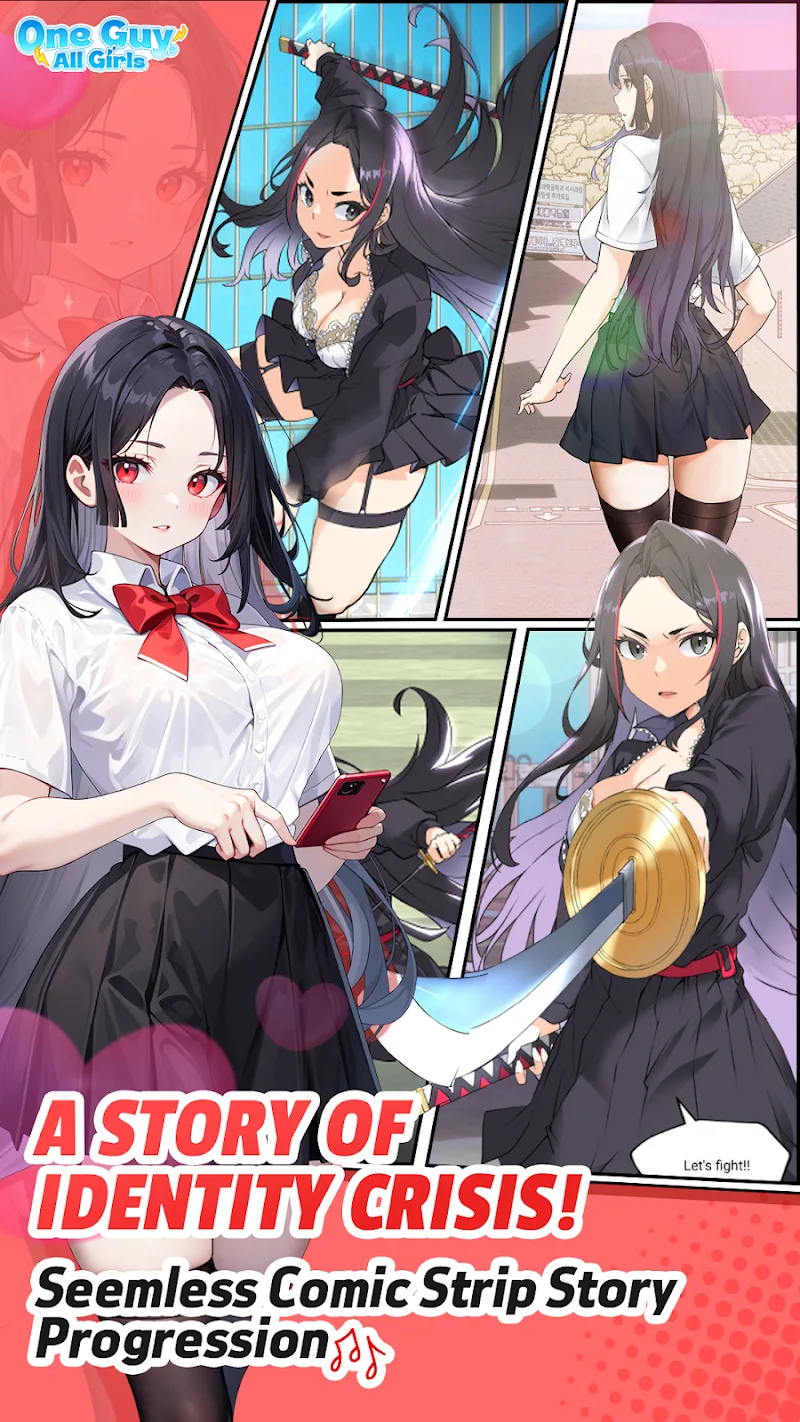
One Guy, All Girls: Idle RPG drops you into a gender‑bent campus story where an ordinary protagonist wakes up transformed and enrolled at Luna Girls’ University, blending idle progression with character-driven scenes and approachable strategy. The introduction sets up a clear narrative hook and the combination of Live2D portraits, webtoon-style chapters and compact chibi skirmishes gives the game a distinct rhythm: story beats and passive growth carry you forward, while short tactical encounters reward attention and team optimization.
The gameplay centers on assembling a balanced team of students, assigning formations and letting missions play out automatically while you manage upgrades and composition between runs. Combat consists of short waves with occasional boss nodes that demand formation adjustments and timing; battles can be observed in chibi animation or accelerated for faster idle progress. Each character contributes a mix of active and passive abilities, and many interactions depend on placement and synergy rather than skillful tapping, which keeps the focus on roster building and tactical planning instead of reaction-based play.
Controls are streamlined for touchscreens and single-handed use: tap a portrait to view stats, drag to rearrange formation slots, and tap skill icons for manual activation when available. The UI emphasizes clarity, showing health, cooldowns and resource inflow while allowing you to hide nonessential panels. Accessibility settings let you tone down animation intensity, enable various levels of auto-battle assist, and choose simplified visuals to preserve performance on older devices, making the game usable across a wide range of hardware.
Progression in One Guy, All Girls: Idle RPG is built around steady power growth, unlockable skills and promotion systems that raise caps and open new ability options. Idle runs and chapter rewards provide materials for equipment upgrades, skill enhancement and character promotions; bond interactions unlock personal scenes and passive bonuses that affect combat performance. Customization extends to equipment choices and role specialization, encouraging players to experiment with different team roles and support builds to overcome stage-specific mechanics.
The presentation mixes polished Live2D portraits for dialogue and webtoon-style pages for story segments, creating an engaging reading experience on mobile screens. Chibi battle visuals are intentionally lightweight to keep skirmishes readable and unobtrusive during idle runs, while portrait motion adds personality in key scenes without overwhelming battery or CPU. Options to reduce or pause portrait animations help conserve resources on long sessions, and the art direction emphasizes distinct silhouettes so characters remain recognizable in any resolution.
Content is arranged into main chapters that advance the overarching plot and shorter side episodes that spotlight individual students and their arcs. Early chapters introduce mechanics at a gentle pace; later stages increase difficulty through enemy combinations, timed objectives and environmental hazards that reward smart formation shifts and prioritized skill use. Challenge trials and higher-difficulty nodes give motivated players a place to test optimized teams and refine strategies, with repeatable targets for gear farming and ability tuning.
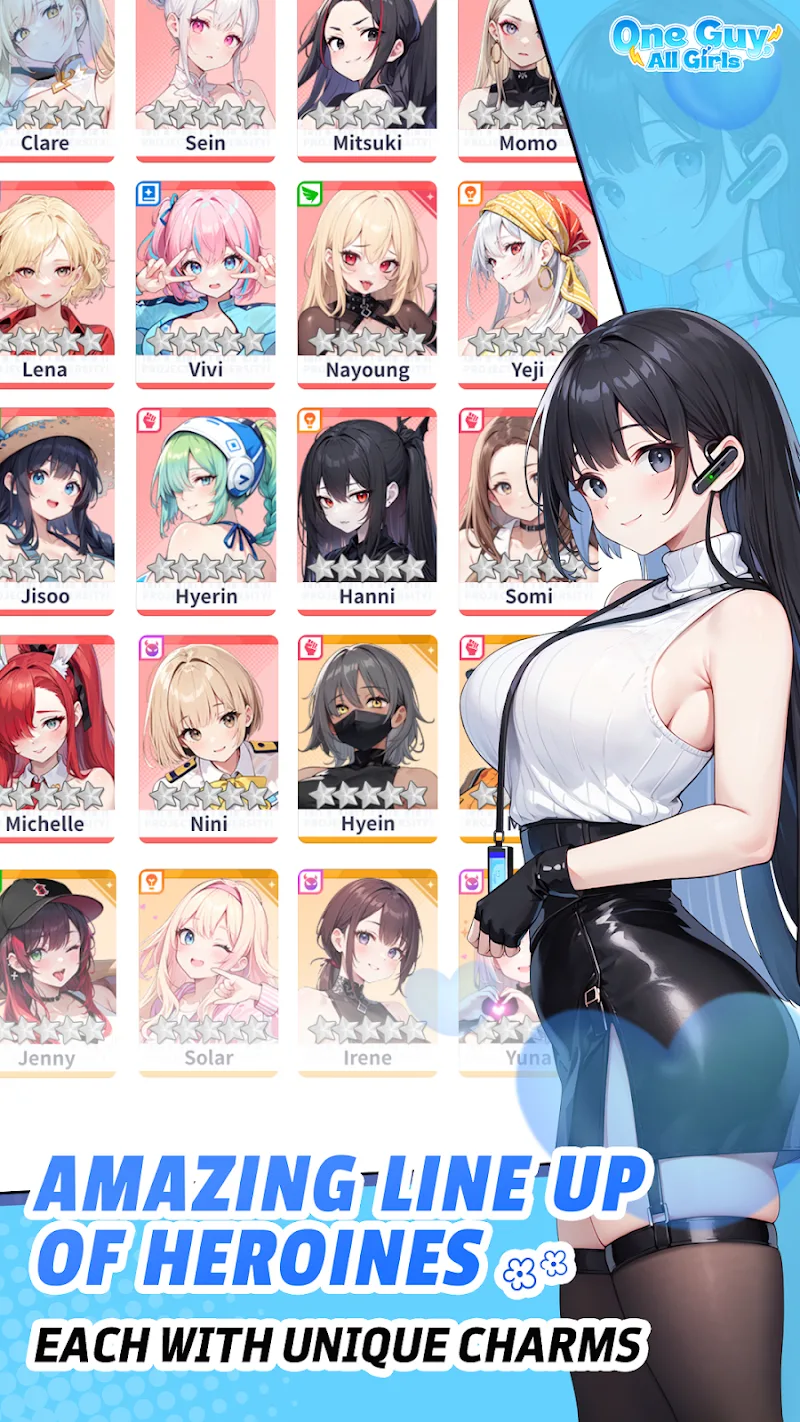
Replayability comes from collecting a full roster, refining formations and reading alternate character interactions unlocked by revisiting chapters with stronger teams. The idle framework rewards consistent play while leaving space for deliberate optimization: adjusting equipment, choosing which skills to promote and experimenting with role distributions all affect how far a team can push into tougher nodes. Because narrative content unlocks over time, returning to earlier stages can reveal new dialogue and additional bond scenes.
The game includes settings to reduce animation and lower graphical detail for smoother performance on older devices, and it stores save data locally to minimize background network usage. Idle accumulation persists between sessions so you continue to earn basic resources while away; offline gains are applied when you return, keeping progression steady without forceful login requirements. Battery‑saving options and limits on background activity help manage long play sessions on mobile devices.
One Guy, All Girls: Idle RPG is best approached as a narrative-forward collector with light strategic choices: focus on building synergies in formations, rotate characters to unlock bond content, and use idle runs to generate upgrade materials while you plan team progress. The game balances passive advancement with meaningful tactical decisions and character writing, making it suitable for short sessions or longer play where you can dig into stories and optimize builds gradually.



Zombie War: Idle Defense
Size:263.12M RPGStickman GO
Size:438.01M RPGATHENA:Blood Twins
Size:1330.94M RPGBlack Clover M
Size:21.00M RPGBunny Wars: Idle RPG
Size:149.94M RPGHow We Show Love
Size:87.00M RPGFishing Life: Love & Fortune
Size:139.00M RPGLiora’s Price of Dignity
Size:368.00M RPGMy Pet Witch
Size:125.50M RPGFemdom City M.A.N.T.I.S. Complete Story Edition
Size:658.60M RPGDoraporn: Family Debt
Size:125.50M RPGZero to Harem Hero: A Hentai Isekai Adventure
Size:1053.00M RPGApril 2024 Clash of Clans Update: Unveiling a Fresh Companion, Enhanced Levels, Chat Tagging, and Be
2024-04-16Arrival of Genshin Impact 4.6 Update: 'Embers of Two Realms, Twilight of Crimson'
2024-04-16V2.2 of the Farlight 84 update introduces an overhauled Season structure, fresh in-game currency, an
2024-04-16Monster Never Cry is now accessible on both Android and iOS mobile devices.
2024-04-18PUBG Mobile Teams Up with Bentley Motors: Luxury Cars, Exclusive Collectibles, and Beyond
2024-04-18March 2024 Free Redemption Codes for Honkai: Star Rail
2024-04-18