English
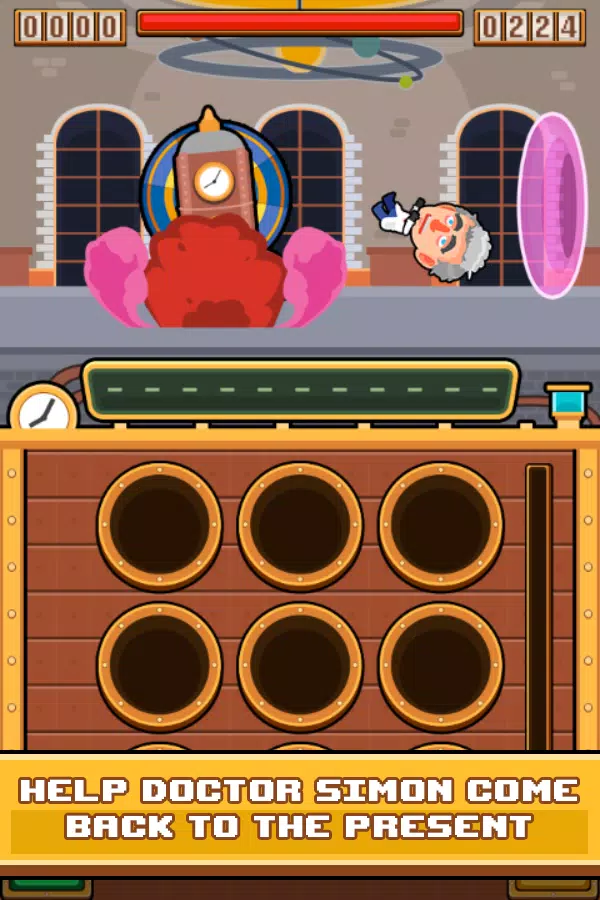
Doctor Simon's Time Crash places you inside a compact, puzzle-focused time-loop where a malfunctioning machine forces repeated cycles and the only way forward is to observe, remember and reproduce growing sequences of shapes and colors. This editor introduction describes the core idea behind Doctor Simon's Time Crash, explains its mechanics and progression, and highlights the accessible controls and visual design that make short sessions satisfying while still offering depth for longer play.
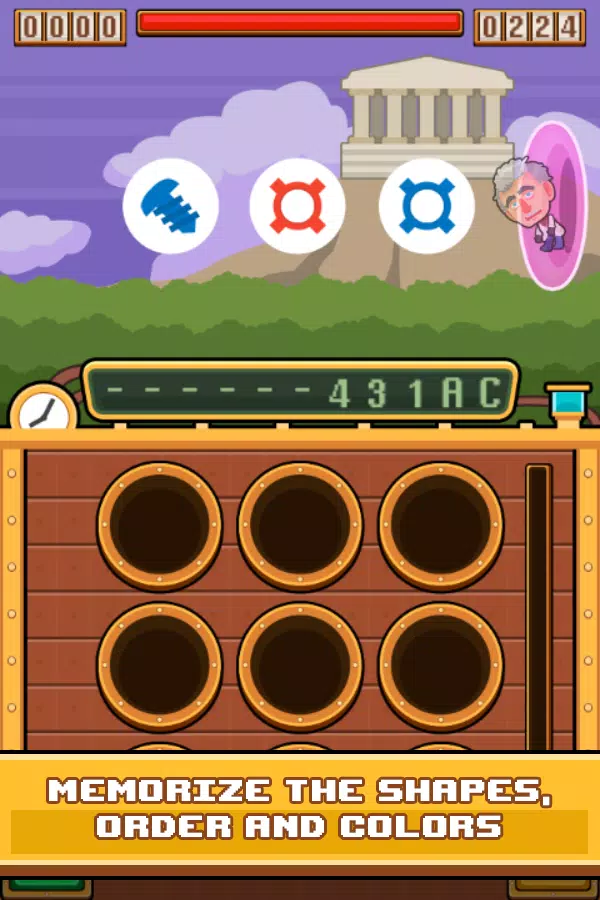
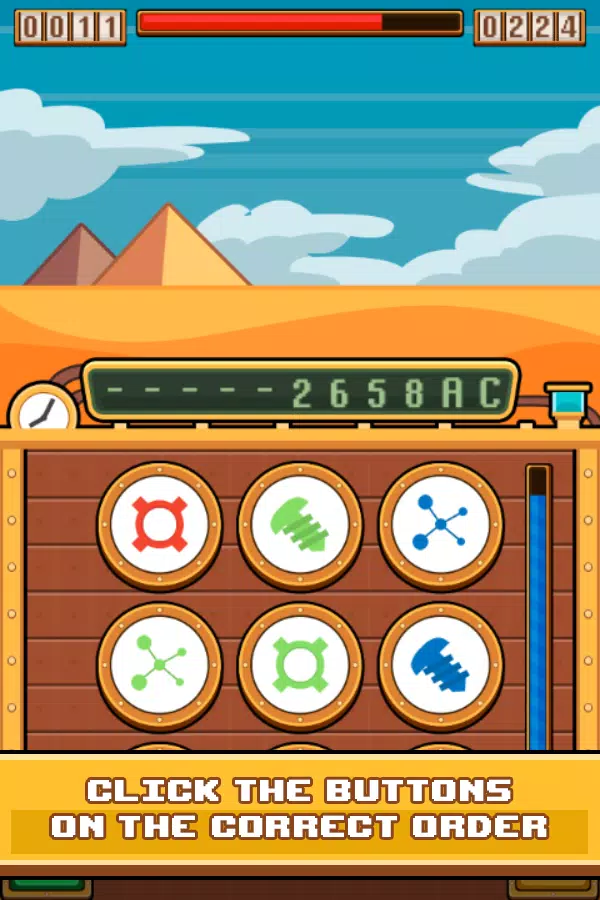
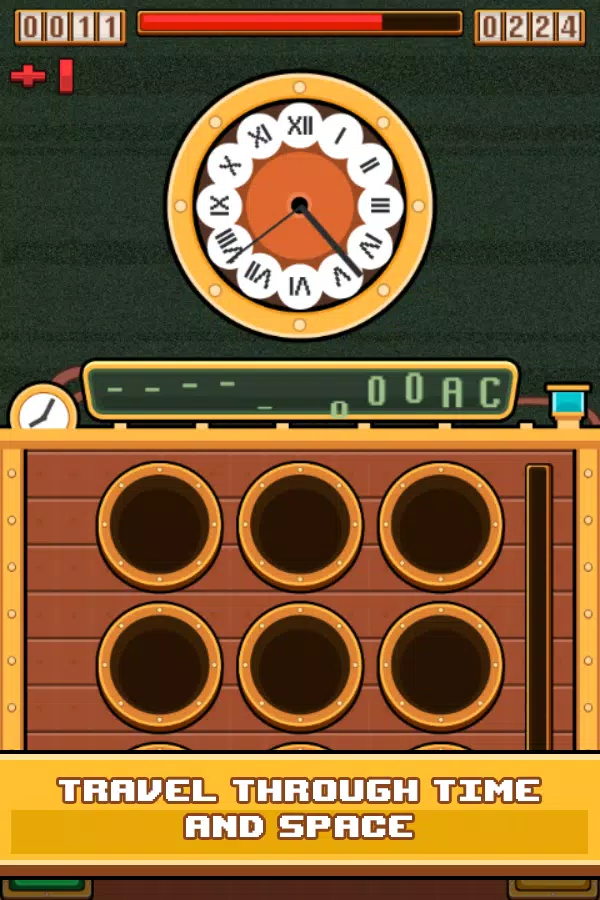
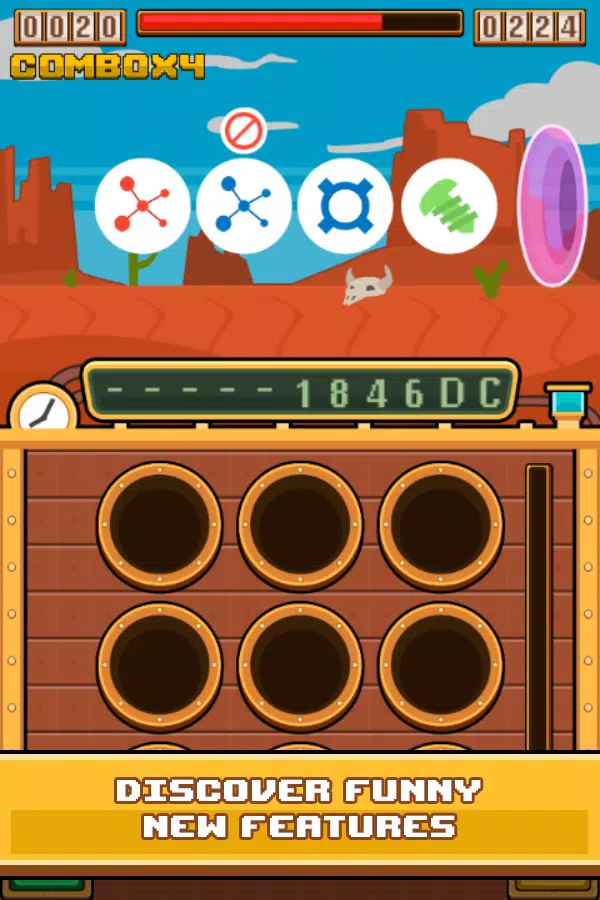
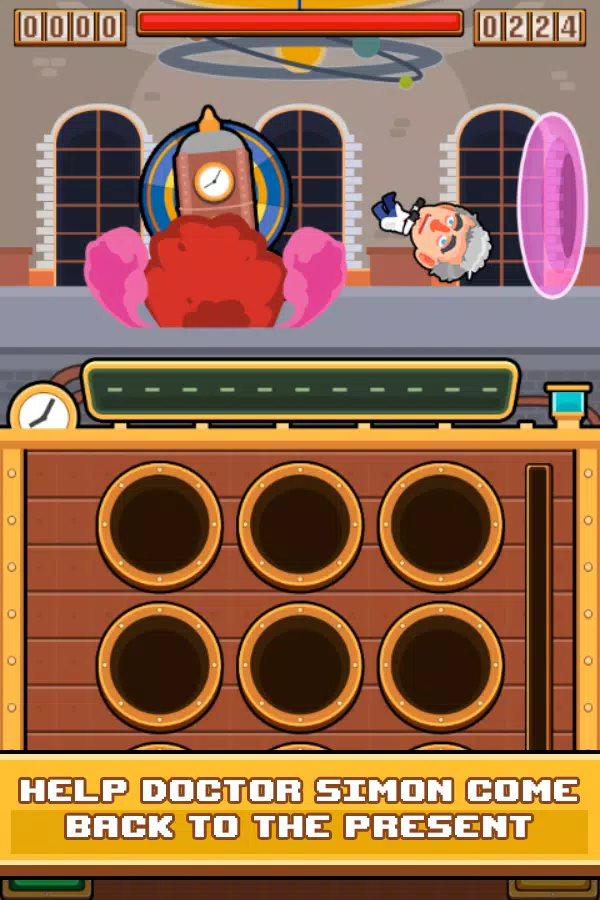
The gameplay updates the classic Simon-style memory test with geometric shapes and color-coded panels that form sequences of increasing length and pace. Each round begins with the machine displaying a pattern — sometimes straightforward, sometimes altered by a temporary distortion — and players repeat that pattern by tapping the matching panels in order. As loops progress, small rule variations appear: overlapping signals that must be resolved in sequence, brief visual interference that obscures a cue for a moment, and alternating playback speeds that reward both recall and timing. These layered adjustments turn a simple recall task into a steadily evolving cognitive challenge without changing the fundamental mobile-friendly loop.
Controls are intentionally minimal to keep focus on pattern recognition rather than input complexity. Panels respond to single taps and provide immediate visual and haptic feedback so timing matters but never feels inconsistent. The interface emphasizes clarity: panels are large enough for quick tapping, animations reinforce correct inputs, and failure states are shown with distinct, non-punitive cues to help players learn rather than punish. Sound cues are integrated to support rhythm-based recognition and can be adjusted or silenced independently from visual feedback.
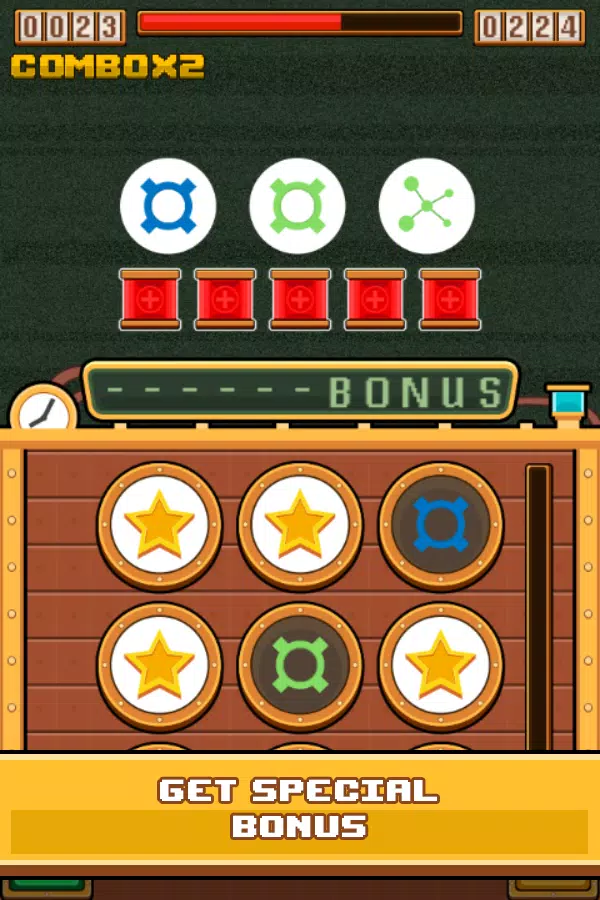
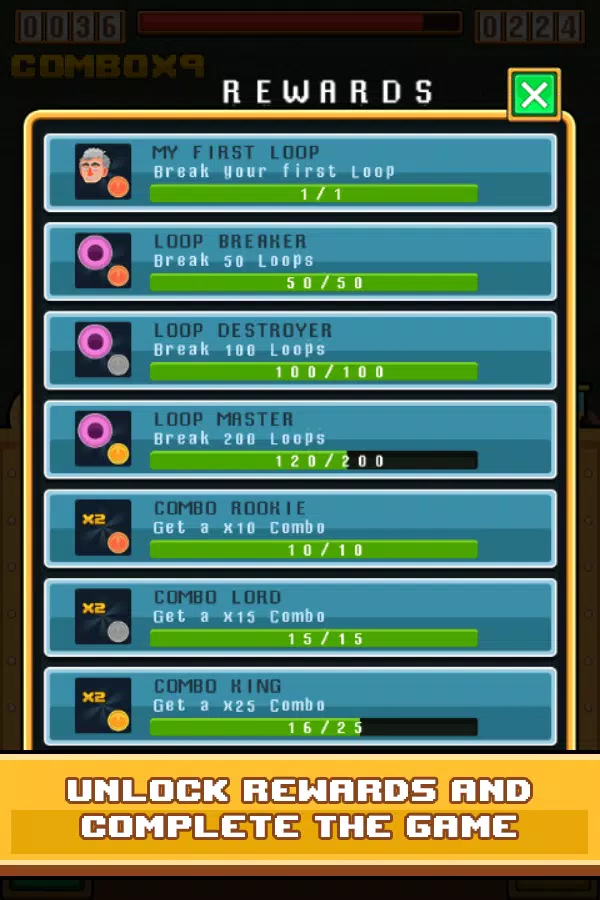
Progression in Doctor Simon's Time Crash is driven by advancing through tiers of loops and completing periodic bonus stages that break the standard flow with focused challenges. Rather than introducing wholesale new mechanics, the game unlocks incremental changes such as alternative shape families, new color palettes, and panel configurations that subtly alter how sequences are presented. Cosmetic unlocks and small gameplay variants provide tangible goals for players who prefer measurable progression, while the tiered loop structure helps track improvement as difficulty scales with predictable, learnable steps.
The visual presentation emphasizes legibility: high-contrast shapes and a retro laboratory aesthetic keep attention on the pattern while giving the game a distinct personality. Levels are organized into loops grouped by tier, and each tier applies a unifying visual twist — for example, a palette swap, a slightly warped display, or a thematic background element — that affects perception without obscuring the cues. This structure supports pacing, allowing early tiers to serve as training grounds and later tiers to become compact tests of sustained concentration under mild visual stressors.
Because the core challenge relies on color and shape, Doctor Simon's Time Crash includes accessibility options designed to broaden playability. A shape-only mode decouples form from color so players who have difficulty distinguishing hues can rely on distinct shapes instead. Additional options include high-contrast palettes, scalable icon sizes, reduced-motion mode to turn off nonessential animations, and separate volume controls for sound effects and ambient cues. Vibration can be toggled for quieter sessions. These settings are intended to make the experience inclusive for a range of visual and sensory needs without changing the underlying challenge.
Replay value comes from a combination of escalating difficulty, varied bonus stages, and a set of optional modifiers that let players tailor the challenge. Timed rounds, speed modifiers that increase sequence playback, and distraction modes that introduce intermittent visual noise are available as optional extras for players seeking harder runs. The game is fully playable offline, making it convenient for short bursts during commutes or short breaks without requiring accounts or persistent connections. Regular play supports steady improvement in pattern recognition and brief-term memory through repeatable, focused practice.
Doctor Simon's Time Crash is well suited for players who enjoy compact, arcade-style memory tests with clear visual design and a gentle learning curve. Sessions are short and designed to feel progressive rather than punitive, accommodating both five-minute practice runs and longer focused sessions to push for longer perfect loops. The combination of approachable controls, accessible options and incremental rewards delivers a polished single-player experience that emphasizes cognitive challenge and replayable content without relying on online features or competitive systems.
My Dream Store
Size:215.30M PuzzleFlying Rahul Gandhi
Size:4.95M PuzzleMerge Magic!
Size:42.97M PuzzleClockmaker
Size:150.52M PuzzleWhere's My Perry?
Size:41.60M PuzzleMonument Valley 2
Size:282.69M PuzzleMerge Neon Car
Size:136.75M PuzzleCubeX - Solver, Timer, 3D Cube
Size:16.87M PuzzleMatch Factory
Size:228.55M PuzzleAntistress - relaxation toys Mod
Size:122.55M PuzzleMergic: Merge & Magic
Size:150.68M PuzzleMerge Mystery : Resort
Size:169.60M PuzzleApril 2024 Clash of Clans Update: Unveiling a Fresh Companion, Enhanced Levels, Chat Tagging, and Be
2024-04-16Arrival of Genshin Impact 4.6 Update: 'Embers of Two Realms, Twilight of Crimson'
2024-04-16V2.2 of the Farlight 84 update introduces an overhauled Season structure, fresh in-game currency, an
2024-04-16Monster Never Cry is now accessible on both Android and iOS mobile devices.
2024-04-18PUBG Mobile Teams Up with Bentley Motors: Luxury Cars, Exclusive Collectibles, and Beyond
2024-04-18March 2024 Free Redemption Codes for Honkai: Star Rail
2024-04-18