English
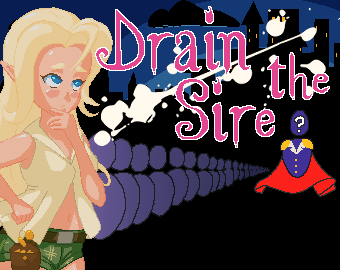
Drain the Sire is a card-driven tactical encounter game that places you in the role of a determined female protagonist who negotiates contracts and builds reputation one patron at a time. Drain the Sire opens with a focused single-player loop: brief narrative set pieces, a hand of tactical cards, and requests that shape both reward and consequence. This alpha build highlights deckbuilding decisions, changing visuals that reflect character state, and encounter design that rewards planning over reflexes.
The core mechanic in Drain the Sire is card-based tactical resolution. Each encounter presents a patron, a list of mandatory contract terms, and optional requests that change available rewards. Players assemble a custom deck before or during a run and use cards to perform service, defend against setbacks, or take offensive actions within the encounter frame. Card effects interact with character traits and temporary modifiers introduced by contracts, so choosing when to play certain cards is as important as which cards you include in your deck.
Controls are designed for touchscreen devices: tap to view card details, drag or tap to play, and use contextual buttons to accept or decline contract clauses. The interface emphasizes clear information flow, showing current contract terms, active modifiers, and visual cues for legal or risky choices. Although the UI is actively refined in this alpha, controls are responsive and intended to be approachable for new players while still providing depth for tactical planning.
Progression in Drain the Sire is driven by reputation, currency, and card acquisition. Completing contracts and meeting optional requests grants resources used to purchase new cards, cosmetic updates, or story clues. Reputation unlocks more challenging patrons and deeper rumors about the elusive Sire, while some cards or bonuses become available only after reaching specific milestones. The result is a steady sense of advancement that encourages experimentation with different deck archetypes.
The game uses evolving character visuals to communicate status, choices, and consequences without explicit depiction. Visual updates reflect changes in equipment, condition, and narrative beats encountered during play. The art is stylistically focused to support atmosphere and readability rather than explicit imagery, helping players quickly interpret their current state and the impact of card play during tense encounters.
Encounters are structured as individual scenes against a variety of patrons, each with their own negotiation style, special requests, and behavioral quirks. A single run will take the player through several encounters that escalate in difficulty and complexity, with occasional branching choices that alter the subsequent patrons and rewards. Replayable encounter sets and randomized optional requests create a variety of tactical puzzles even with a limited content pool in the alpha.
Deckbuilding is central: players craft a deck to support preferred approaches such as cautious service, aggressive confrontation, or hybrid strategies that exploit contract bonuses. Customization also extends to character visuals and selectable modifiers that tailor difficulty or grant unique starting cards. These systems allow meaningful personalization without introducing complex equipment trees or unrelated progression layers.
Replayability comes from branching contracts, randomized optional requests, and a range of patrons with different behaviors. Difficulty increases through encounter modifiers and more demanding contract terms, and there are optional high-risk choices that yield greater rewards for players seeking challenge. The alpha intentionally emphasizes experiment-friendly runs so players can test synergies and discover new strategies.
User experience focuses on clarity and feedback: tooltips, a concise in-game UI handbook, and visual indicators for card effects and contract status. Accessibility options include adjustable text sizing and clear contrast for critical UI elements to support different viewing needs. Drain the Sire is a single-player experience that functions fully offline after installation, allowing play without a persistent network connection.
This release is an active alpha: playable and intended for feedback, but limited in scope and subject to bugs. Players may encounter stability issues or incomplete explanations for certain contract interactions; progress can be lost if the browser or page is refreshed in web builds. The solo development team is responsive to reports and plans regular updates, clarifications to the UI handbook, and content expansion based on community feedback.
Drain the Sire is distributed as a free alpha build for players who enjoy experimental design and tactical card systems. The developer welcomes detailed bug reports, balance suggestions, and constructive feedback via the provided channels. Occasional donation or subscription options support continued development and early access extras, but the core gameplay remains free to explore during this testing phase.
Cum in Out
Size:99.19M Casual2jbet Game
Size:12.94M CasualAlabell
Size:2016.37M CasualTrick or Ahri
Size:93.31M CasualRed snow
Size:216.55M CasualSumod.beta
Size:5.08M CasualTwo Weeks On
Size:123.18M CasualTightfault Revamp Edit
Size:1.14M CasualXSerum
Size:950.87M CasualDouble Homework - Remaster
Size:1310.88M CasualDevious Work : Demo
Size:92.25M CasualKnödel TD
Size:74.40M CasualApril 2024 Clash of Clans Update: Unveiling a Fresh Companion, Enhanced Levels, Chat Tagging, and Be
2024-04-16Arrival of Genshin Impact 4.6 Update: 'Embers of Two Realms, Twilight of Crimson'
2024-04-16V2.2 of the Farlight 84 update introduces an overhauled Season structure, fresh in-game currency, an
2024-04-16Monster Never Cry is now accessible on both Android and iOS mobile devices.
2024-04-18PUBG Mobile Teams Up with Bentley Motors: Luxury Cars, Exclusive Collectibles, and Beyond
2024-04-18March 2024 Free Redemption Codes for Honkai: Star Rail
2024-04-18