English
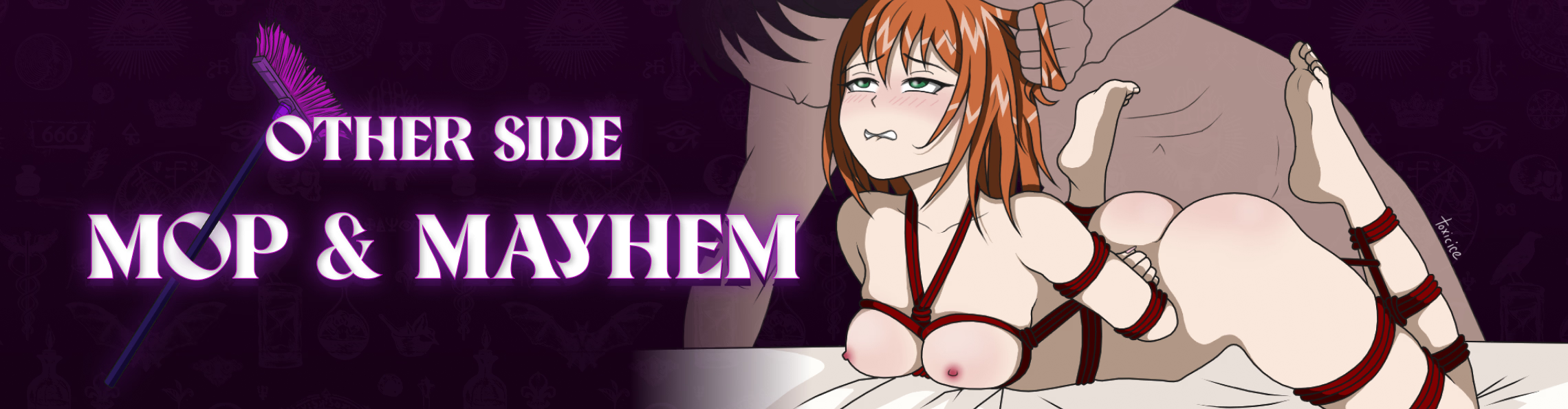
Other Side: Mop & Mayhem is a single-player roguelike with mature themes that invites players to experiment with unconventional mechanics while navigating procedurally generated runs. In this title you play a Lewdmancer who converts personal energies and evocative items into combat resources, mixing tactical choices with narrative consequence. The description below explains core systems, controls, progression, visual direction, and accessibility so you can decide whether the tone and challenge fit your preferences.
At its core, Other Side: Mop & Mayhem blends item-based buildcraft with a combat system that rewards experimentation. Players collect and combine evocative items, ritual signs, and modifiers to assemble abilities and passive effects; those combinations create distinct playstyles rather than a single power curve. Encounters emphasize choices that can alter your path: riskier interactions may yield stronger temporary effects, while conservative play favors long-term survival. Procedural generation ensures encounters, item placement, and event sequences vary from run to run, keeping each session focused on discovery and adaptation.
The game is designed for touch devices with a clear, context-sensitive interface that puts actions and build options within easy reach. Core interactions use simple taps and gestures to target abilities, open inventory screens, or activate ritual signs. Tooltips and an optional guided tutorial introduce new systems gradually so you can learn critical combos without feeling overwhelmed. Inventory management and ability assignment are streamlined so players can swap components mid-run and see immediate feedback on how combinations will behave in combat.
Progress in Other Side: Mop & Mayhem is driven by run-based rewards and optional meta-progression. Each successful run can unlock new items, signs, or character options that expand future experimentation. While individual runs emphasize moment-to-moment decision making and risk-reward tradeoffs, the broader progression encourages trying fresh combinations and incremental mastery. Difficulty scales with your choices: pursuing powerful synergies often increases short-term vulnerability, while cautious approaches build a slower but steadier path forward.
The game favors a distinct, stylized aesthetic that supports the setting and mood without relying on hyper-realism. Levels are presented as themed zones with unique encounter types and atmospheric lighting, and their layouts are assembled from modular pieces so each expedition feels different. Visual cues highlight interactable objects, enemy telegraphs, and environmental hazards to help players make informed tactical decisions even when runs grow tense.
Customization centers on assembling synergies between items, toys, and ritual signs to form a personal playstyle. Equipment and modifiers change how abilities behave and can be mixed in surprising ways; the interface encourages experimentation by showing immediate previews of combined effects. Cosmetic choices and minor appearance tweaks are handled in-game so players can personalize their character’s look without affecting balance. The design rewards creativity over strict optimization, letting unconventional builds thrive.
Companion characters appear throughout runs and present meaningful choices: you can attempt to form alliances, steer a companion’s development, or pursue darker options that alter future encounters. These relationship mechanics have tangible gameplay consequences and feed into branching outcomes tied to the central narrative about rescuing a friend or confronting the pull of the Other Side. Story beats are integrated into gameplay rather than isolated as cutscenes, so choices feel consequential during play.
Challenge is handled through procedural difficulty scaling, optional modifiers, and clear risk-reward loops. Players can toggle easier settings or fewer random modifiers for a more relaxed experience, or enable harsher conditions to test advanced strategies. Accessibility options include adjustable text sizes and reduced visual intensity settings, and tooltips can be expanded or minimized to match your familiarity with the systems.
Other Side: Mop & Mayhem is a single-player experience that runs without requiring an online connection, designed to perform across a range of devices with adjustable quality settings. Short, modular runs make it suitable for casual sessions and longer playthroughs alike, while fast restart loops encourage iterative learning. The interface emphasizes clarity so new players can focus on experimenting with combos and narrative choices rather than wrestling with menus. Mature themes are present and handled in a stylized, suggestive manner rather than explicit depiction, so consider the tone before downloading.




Cum in Out
Size:99.19M Casual2jbet Game
Size:12.94M CasualAlabell
Size:2016.37M CasualTrick or Ahri
Size:93.31M CasualRed snow
Size:216.55M CasualSumod.beta
Size:5.08M CasualTwo Weeks On
Size:123.18M CasualTightfault Revamp Edit
Size:1.14M CasualXSerum
Size:950.87M CasualDouble Homework - Remaster
Size:1310.88M CasualDevious Work : Demo
Size:92.25M CasualKnödel TD
Size:74.40M CasualApril 2024 Clash of Clans Update: Unveiling a Fresh Companion, Enhanced Levels, Chat Tagging, and Be
2024-04-16Arrival of Genshin Impact 4.6 Update: 'Embers of Two Realms, Twilight of Crimson'
2024-04-16V2.2 of the Farlight 84 update introduces an overhauled Season structure, fresh in-game currency, an
2024-04-16Monster Never Cry is now accessible on both Android and iOS mobile devices.
2024-04-18PUBG Mobile Teams Up with Bentley Motors: Luxury Cars, Exclusive Collectibles, and Beyond
2024-04-18March 2024 Free Redemption Codes for Honkai: Star Rail
2024-04-18