English
Chrome Valley Customs puts you in the driver’s seat of a hands-on restoration garage where vintage cars are rescued, rebuilt and personalized. This editor-style introduction highlights how Chrome Valley Customs blends careful repair mechanics, match-style parts puzzles and short race stages into a single experience that appeals to players who enjoy creative customization, mechanical problem solving and quick, satisfying challenges.
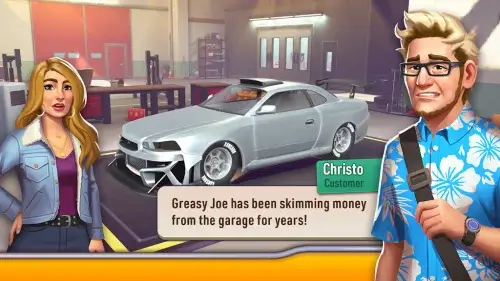
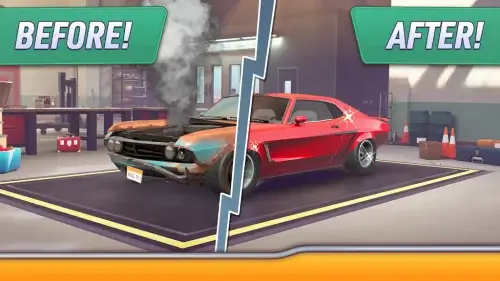
The core of Chrome Valley Customs is a mixed loop of restoration work, strategic puzzle play and testing runs on purpose-built tracks. Restoration segments require sequential tasks — diagnosing rusted components, replacing parts and tuning engines — while match-style puzzles unlock new parts and rare upgrades. Between rebuilds you can take completed vehicles through short race levels that check performance and handling. The game also layers personality into the garage with a small crew whose dialogue and reactions add context and light banter without overwhelming gameplay.
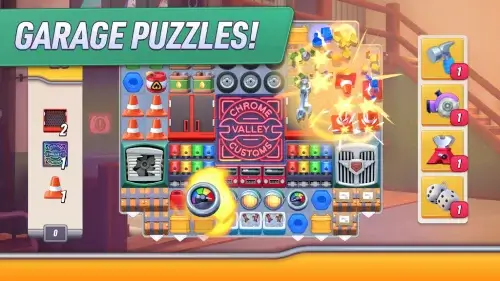
Gameplay alternates between detailed workshop sequences and more arcade-like challenges. Workshop scenes present repair jobs that are solved through a combination of tap-and-drag interactions and resource management: you decide which components to prioritize, when to spend limited parts and how much time to invest in cosmetic versus performance changes. Puzzle sections use a match-style format where linking tiles or components grants specific parts, forcing a balance between luck and planning. Race segments are short, focused stages that test the choices you made in the garage — for example, a heavier restoration path may increase durability but change handling characteristics.
Control design favors straightforward touch interactions suitable for a wide range of devices. Repair tasks are performed with taps and drags, painting and detailing rely on swipe gestures, and match puzzles use simple tile taps and swaps. Racing controls are concise and intuitive, using on-screen steering and speed inputs; some devices may support tilt steering for players who prefer motion controls. Accessibility options aim to reduce friction: adjustable control sensitivity, an option to simplify repair steps, and a colorblind mode for puzzle tiles help make the game approachable for different players.
Progression centers on unlocking parts, shop upgrades and new restoration blueprints as you complete jobs and puzzles. A light reputation system in the garage tracks milestones and opens access to more ambitious projects and tougher race stages. Replay value comes from pursuing alternate builds — you can focus on authentic vintage restorations, modern performance upgrades or show-car cosmetic flourishes — and from revisiting earlier jobs to improve time or efficiency. Short challenges and optional target goals extend play without requiring long session times.
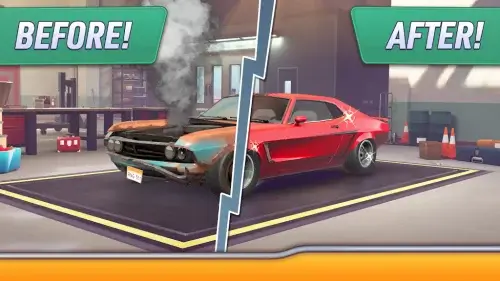
The visual approach combines nostalgic car silhouettes with detailed textures for metal, paint and worn interiors, creating a contrast between rusty beginnings and polished finishes. Garages are staged across a handful of distinct locations that function as tutorial, mid-game and advanced workshops, while race stages are compact tracks with clear obstacles that emphasize testing rather than lengthy courses. Lighting and color choices support customization options like neon accents and metallic finishes so player changes are visually meaningful.
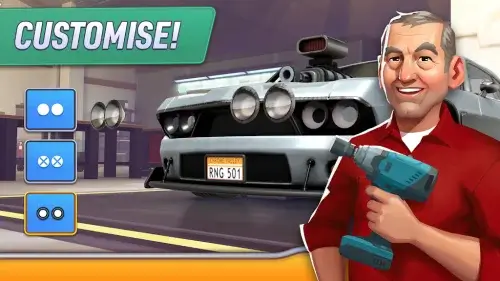
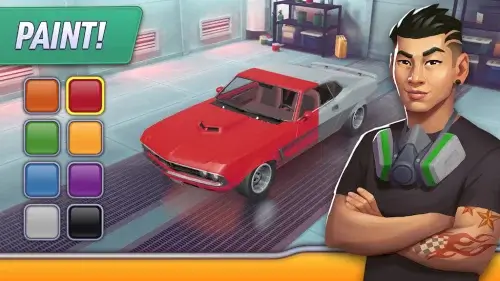
Customization is central: choose paint schemes, interior materials, wheel styles, neon accents and performance upgrades to shape each build. Cosmetic and mechanical changes both affect in-game performance and appearance, so decisions have tangible outcomes during race tests. The small garage crew provides helpful tips, celebratory interactions after big restorations and contextual dialogue that makes each project feel part of a longer narrative arc rather than a string of disconnected tasks.
Challenge variety comes from timed repairs, limited-part scenarios and puzzle boards with special tiles that require strategic combos. Difficulty ramps gradually, offering optional harder jobs for players who seek greater reward. Chrome Valley Customs is designed to be playable offline for most restoration, customization and race content, allowing casual play without a persistent connection while saving progress locally between sessions.
The game offers a satisfying loop that rewards careful restoration and design choices, a wide range of cosmetic and performance customization options, and diverse mechanics that alternate between methodical repairs, puzzle strategy and short race tests. The approachable controls and accessibility options help make the experience available to a broad audience.
Some players may find repetitive elements in longer restoration sessions, and the hybrid focus on both design and racing might not match the expectations of those seeking a pure racing simulator or a pure puzzle game. Still, for players who enjoy inventive customization and steady progression, the balance of activities provides a consistently engaging garage experience.
My Dream Store
Size:215.30M PuzzleFlying Rahul Gandhi
Size:4.95M PuzzleMerge Magic!
Size:42.97M PuzzleClockmaker
Size:150.52M PuzzleWhere's My Perry?
Size:41.60M PuzzleMonument Valley 2
Size:282.69M PuzzleMerge Neon Car
Size:136.75M PuzzleCubeX - Solver, Timer, 3D Cube
Size:16.87M PuzzleMatch Factory
Size:228.55M PuzzleAntistress - relaxation toys Mod
Size:122.55M PuzzleMergic: Merge & Magic
Size:150.68M PuzzleMerge Mystery : Resort
Size:169.60M PuzzleApril 2024 Clash of Clans Update: Unveiling a Fresh Companion, Enhanced Levels, Chat Tagging, and Be
2024-04-16Arrival of Genshin Impact 4.6 Update: 'Embers of Two Realms, Twilight of Crimson'
2024-04-16V2.2 of the Farlight 84 update introduces an overhauled Season structure, fresh in-game currency, an
2024-04-16Monster Never Cry is now accessible on both Android and iOS mobile devices.
2024-04-18PUBG Mobile Teams Up with Bentley Motors: Luxury Cars, Exclusive Collectibles, and Beyond
2024-04-18March 2024 Free Redemption Codes for Honkai: Star Rail
2024-04-18