English
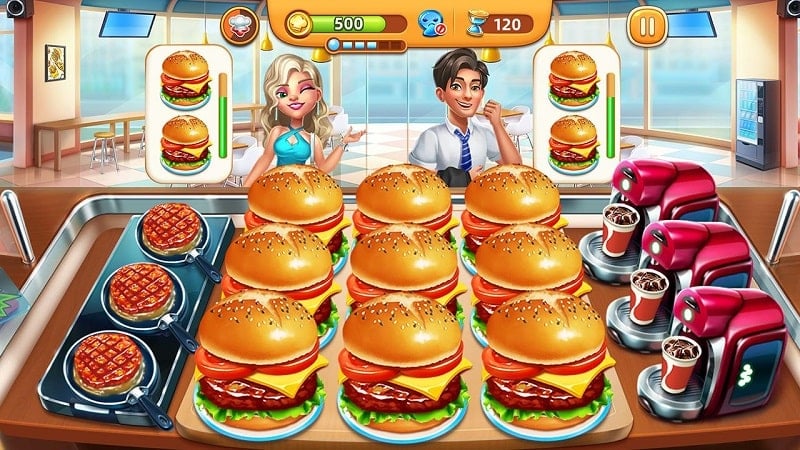
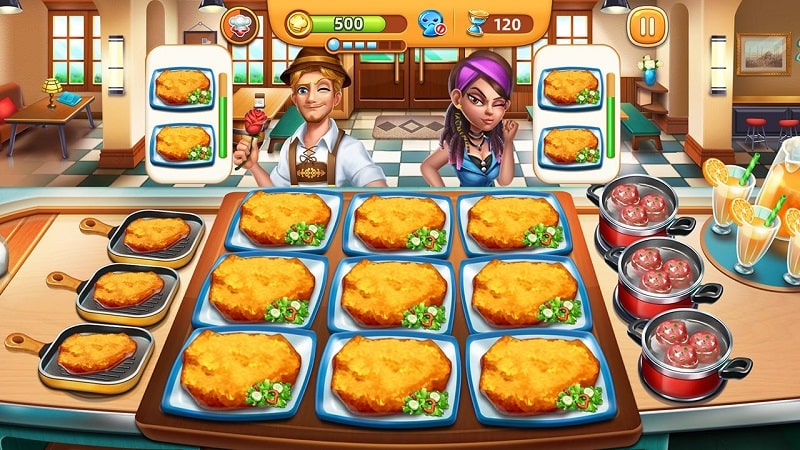
Cooking City is a hectic, reflex-driven mobile cooking game that puts you in charge of a traveling restaurant where speed and accuracy decide whether a service earns tips or loses customers. In each level of Cooking City you read incoming orders, select and combine ingredients from a mobile food trolley, and operate a changing set of kitchen tools—everything from hot pans to automatic dispensers—to complete dishes before impatient diners' time bars expire. The first paragraph of this description highlights the game's core loop: quick decision-making, fast touch controls, and a steady escalation of challenge as you expand your mobile kitchen.
Gameplay in Cooking City is built around short, intense shifts that emphasize pattern recognition and hand-eye coordination. Orders appear as icons that you must scan quickly, then tap or drag ingredients into the correct sequence on the trolley or directly onto pans and machines. Controls are intentionally simple and responsive: single taps select, tap-and-drag arranges ingredient order, and context-sensitive buttons activate appliances or serve completed dishes. There is an introductory sequence that eases players into mechanics and new tools, and later levels layer additional mechanics such as timed dispensers or ingredients that require a second interaction, so the control scheme remains approachable while still challenging skilled players.
Progression follows a clear, rewarding loop: fulfill orders to earn tips and upgrade cash, then spend earnings to expand stoves, add machines, and unlock faster or higher-capacity appliances. Upgrades directly affect throughput, allowing you to handle busier shifts and more complex menus. Rather than deep RPG-style leveling, customization in Cooking City focuses on practical choices—prioritizing faster pans, wider trolleys, or automation that suits your preferred playstyle. Level requirements and special conditions encourage players to experiment with different upgrade paths to reach speed and efficiency targets.
Levels are organized around themed cities and cuisines, each introducing unique visual backdrops and a handful of signature dishes that shape which tools and ingredients will be emphasized. Early levels act as short tutorials for individual mechanics, while later stages combine multiple constraints such as limited ingredient supply, dual-station cooking, or accelerated order timers. Special challenge conditions appear periodically to keep gameplay fresh, including time-limited shifts, waves of rush-hour customers, and levels where certain appliances behave differently. These systems are designed to reward pattern recognition and quick adaptation rather than memorization alone.
The visual presentation of Cooking City leans toward bright, cartoony graphics and clear, readable icons so players can instantly identify orders and appliance states during hectic moments. UI elements are arranged to reduce clutter: order trays, time bars, and the food trolley are placed where they are easily reached with a thumb. Small visual cues—such as color changes, flashing edges, or a subtle glow when an item is ready—help communicate state without relying on text. The audio and visual feedback loop supports quick decision-making, giving a satisfying sense of rhythm as you progress through a shift.
Replay value comes from improving personal bests, mastering tighter level conditions, and testing new upgrade combinations on previously completed stages. Because each city introduces new dish types and appliance behavior, replaying earlier levels with upgraded equipment can produce markedly different pacing and strategies. Cooking City is designed to be playable in short sessions and does not require a persistent online connection for the core experience, making it convenient for commuters or players who prefer offline play.
To accommodate different skill levels, the game gradually increases speed and complexity rather than overwhelming players immediately. The early stages act as hands-on tutorials that introduce one mechanic at a time, and visual aids help all players follow orders under pressure. While the overall pace is intentionally fast, players who prefer a steadier approach can focus on upgrades that emphasize automation and capacity to smooth the experience.
Cooking City shines when you want quick, exciting gameplay that rewards reflexes and strategic upgrade choices; its concise shifts make it easy to pick up and practice skills. The trade-offs are intentional: the emphasis is on service speed and arcade-style challenge rather than slow, methodical recipe simulation, and difficulty can ramp up quickly for players who prefer a relaxed experience. Overall, the game offers a compact, replayable cooking arcade loop with clear progression, accessible controls, and varied city-themed levels to keep each session feeling fresh.


Free Fire: 9th Anniversary
Size:526.00M ActionSmashy City - Monster Battles
Size:82.26M ActionCity Train Driver Simulator 2019
Size:129.88M ActionIce Scream 3: Scary Horror
Size:194.40M ActionFort Conquer
Size:23.58M ActionWorms Zone .io - Voracious Snake
Size:201.54M ActionOnce In A Lifetime
Size:1.00M ActionStickman Party 234 MiniGames
Size:123.90M ActionNinja Dash Run
Size:63.30M ActionIce Scream
Size:166.09M ActionUFO
Size:2.00M ActionPixel Survive Mod
Size:52.90M ActionApril 2024 Clash of Clans Update: Unveiling a Fresh Companion, Enhanced Levels, Chat Tagging, and Be
2024-04-16Arrival of Genshin Impact 4.6 Update: 'Embers of Two Realms, Twilight of Crimson'
2024-04-16V2.2 of the Farlight 84 update introduces an overhauled Season structure, fresh in-game currency, an
2024-04-16Monster Never Cry is now accessible on both Android and iOS mobile devices.
2024-04-18PUBG Mobile Teams Up with Bentley Motors: Luxury Cars, Exclusive Collectibles, and Beyond
2024-04-18March 2024 Free Redemption Codes for Honkai: Star Rail
2024-04-18