English
Roman 2048 reimagines the familiar sliding-tile puzzle by swapping Arabic numerals for Roman numerals, giving the classic 2048 formula a historical and educational twist. In Roman 2048 you still slide tiles across a simple grid, merge matching values and steadily build higher-value tiles, but each step also reinforces recognition of symbols like I, V, X and D. The result is an accessible puzzle experience that favors careful planning and pattern recognition while offering a fresh visual identity that feels more museum exhibit than arcade screen.
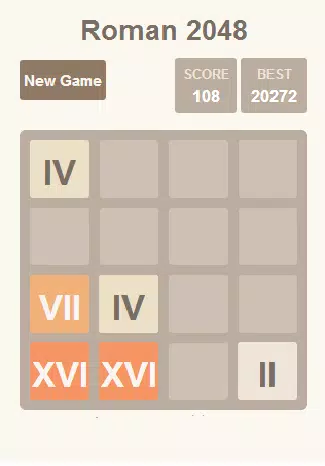
The rules will be familiar to anyone who has tried the original 2048: move tiles in four directions, combine identical tiles to form the next value in the sequence, and manage the board so you can continue creating merges. The twist in Roman 2048 is that each merged value appears as a Roman numeral, so progressing to larger tiles becomes an exercise in both strategy and symbol familiarity. Difficulty emerges organically as the board fills and choices become constrained, encouraging forward thinking and the occasional tactical reset when necessary.
Controls are intentionally simple: swipe on touchscreens to slide tiles, or use on-screen arrows when precise input is preferred. The interface is designed for single-handed play on phones and tablets, with responsive touch targets and clear hit areas to reduce accidental moves. Keyboard arrow support is available when the app runs on devices with physical keys or when used within Android environments that expose keyboard input, giving players more flexibility in how they interact with the puzzle.
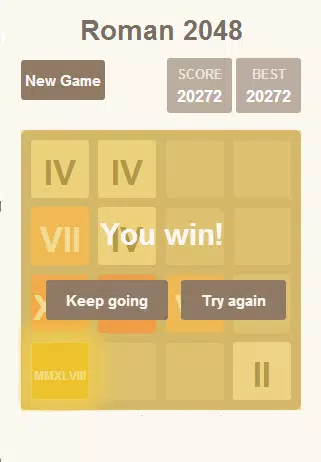
Progression in Roman 2048 follows the classic doubling pattern where smaller tiles combine into progressively larger ones until a highest target tile is reached—here presented as MMXLVII for a historical flourish. Scores are calculated from the values of merged tiles and are stored locally so you can track personal bests and aim to beat previous sessions. The steady ramp in difficulty makes each run meaningful: small improvements in planning often lead to noticeably higher end-game tiles and scores.
The visual design balances clarity with atmosphere. Tiles use bold Roman glyphs set against a muted, high-contrast background that keeps focus on gameplay while hinting at an antiquarian theme. Animations are kept minimal to preserve readability, and color choices emphasize contrast for easier recognition of adjacent tiles. The UI favors legibility, with adjustable font sizes for the numerals so players who rely on larger text can still enjoy the full experience.
Roman 2048 retains the open-ended board structure common to sliding-tile puzzles: there are no discrete levels to clear, only single sessions that end when no more moves are possible. This design supports short, focused play sessions as well as longer, goal-oriented attempts to reach the top tile. Each session naturally scales in length depending on how aggressively a player pursues merges versus how conservatively they manage space.
Customization emphasizes readability and accessibility rather than cosmetic gimmicks. Players can adjust text size for the Roman numerals and enable high-contrast mode for better visibility in different lighting conditions. Controls are simplified and consistent so new players can get started quickly, while subtle visual options help users tailor the experience to their needs without changing the underlying challenge.
Replay value comes from the inherent puzzle challenge: every new session presents a different tile arrival sequence and requires fresh planning. The Roman numerals add a mental layer to each decision because merges also serve as reinforcement for the notation. For players seeking extra challenge, self-imposed goals such as reaching a particular Roman tile or improving a stored high score provide structured objectives within the otherwise open-ended format.
The app is optimized for offline play so puzzles can be enjoyed without an internet connection, making it a good fit for commutes or short breaks. Sessions auto-save locally so you do not lose progress if the app is interrupted. Roman 2048 is built to perform smoothly across a wide range of Android devices and screen sizes, with responsive layouts that prioritize consistent behavior whether you play on a compact phone or a larger tablet.
This title appeals to players who like classic logic puzzles, casual gamers looking for bite-sized mental exercise, and learners curious about Roman numerals. Its combination of intuitive mechanics, readable presentation and light educational value makes it suitable for family play and solo study alike. The historical styling enhances the atmosphere without altering the core gameplay, so the puzzle remains the primary focus.
My Dream Store
Size:215.30M PuzzleFlying Rahul Gandhi
Size:4.95M PuzzleMerge Magic!
Size:42.97M PuzzleClockmaker
Size:150.52M PuzzleWhere's My Perry?
Size:41.60M PuzzleMonument Valley 2
Size:282.69M PuzzleMerge Neon Car
Size:136.75M PuzzleCubeX - Solver, Timer, 3D Cube
Size:16.87M PuzzleMatch Factory
Size:228.55M PuzzleAntistress - relaxation toys Mod
Size:122.55M PuzzleMergic: Merge & Magic
Size:150.68M PuzzleMerge Mystery : Resort
Size:169.60M PuzzleApril 2024 Clash of Clans Update: Unveiling a Fresh Companion, Enhanced Levels, Chat Tagging, and Be
2024-04-16Arrival of Genshin Impact 4.6 Update: 'Embers of Two Realms, Twilight of Crimson'
2024-04-16V2.2 of the Farlight 84 update introduces an overhauled Season structure, fresh in-game currency, an
2024-04-16Monster Never Cry is now accessible on both Android and iOS mobile devices.
2024-04-18PUBG Mobile Teams Up with Bentley Motors: Luxury Cars, Exclusive Collectibles, and Beyond
2024-04-18March 2024 Free Redemption Codes for Honkai: Star Rail
2024-04-18