English
Tokitome Man's Lifespan is an immersive single-player visual role-playing experience that invites you to guide a pixel-art protagonist through the unpredictable arc of a lifetime. Tokitome Man's Lifespan opens with a simple premise — lifespan is both story and resource — and builds from there, combining branching narrative choices, a time-stop mechanic, and compact systems for relationships, development and personal pleasure that change how each decision matters.
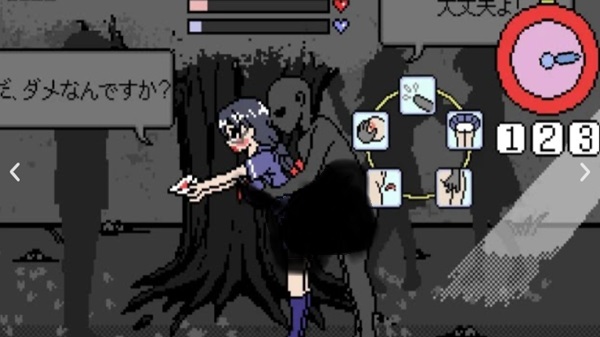
At its core the game centers on choice-driven progression: you make multiple-choice decisions that advance the story while consuming a finite time resource. The time-stop mechanic lets you pause progression to consider consequences and explore alternative paths, turning lifespan into a tactical element rather than a passive timer. Choices affect two linked meters (pleasure and development) which gate scenes, relationship reactions and later-life opportunities. Hidden collectible cards and environmental details reward careful exploration and often unlock short branches or secret scenes that alter endings.
The control design is intentionally simple and mobile-friendly. Most interactions are tap-to-select on dialogue or action options, with occasional contextual controls for exploring locations or inspecting inventory cards. The interface emphasizes readable text and clear icons for the two meters so you can see strategic trade-offs at a glance. Menus remain minimal to keep the focus on story, while quick-save slots and a compact history view let you revisit earlier choices without interrupting the flow.
Progression in Tokitome Man's Lifespan is nonlinear: instead of levels, you move through life stages such as childhood, adolescence, adulthood and old age, with branching paths inside each stage. The dual-meter system encourages trade-offs — pursuing immediate pleasures can close educational or relationship opportunities, while steady development can create long-term advantages. The challenge comes from balancing short-term satisfaction against future options, and from discovering the hidden conditions that unlock new cards and endings. There are no timed reaction challenges; difficulty is narrative and choice-based, so learning payoff comes from replay and experimentation.
Visuals use expressive pixel art to convey mood and character through compact scenes rather than cinematic realism. Each life stage has a distinct palette and background details that reflect changing themes and social settings. Scenes function as compact “levels” where dialogue choices, exploration and card discovery are the primary activities. This structure keeps sessions short and suitable for mobile play while still allowing long, layered playthroughs for players who want to follow an entire lifespan in one sitting.
Character customization is narrative-first: you shape identity and role through choices that influence how NPCs respond and which story arcs become available, rather than through deep cosmetic editors. Collectible cards found during play act as small upgrades, story keys or flavor items that reveal background lore and occasionally alter meter behavior. Cards are stored in a simple in-game album and provide optional goals for completionist players without imposing requirements on first-time story progress.
The game emphasizes replayability by design. Multiple endings depend on which paths you prioritized, the balance between pleasure and development, and whether you discovered specific hidden cards. Time manipulation and the compact scene structure make it practical to explore alternate choices in subsequent runs, so uncovering new branches is a central part of the overall experience rather than a peripheral extras list.
Tokitome Man's Lifespan is designed for offline play and small storage footprints, making it convenient for players who want a narrative experience without constant connectivity. Text size, contrast and input simplicity are prioritized to help readability; the game avoids fast reflex mechanics and supports short-session saves. The presentation and pacing are deliberate, so players who prefer quieter, reflective storytelling will find a consistent experience, while those seeking fast action may find the tempo slower.
The game includes mature themes handled in a narrative context and therefore is intended for adult players; content avoids explicit depictions and focuses on life choices and their consequences. If you enjoy decision-driven stories, strategic resource trade-offs and retro presentation, Tokitome Man's Lifespan offers layered storytelling with meaningful replay options and a compact, accessible experience that respects offline play and player time.



My Dream Store
Size:215.30M PuzzleFlying Rahul Gandhi
Size:4.95M PuzzleMerge Magic!
Size:42.97M PuzzleClockmaker
Size:150.52M PuzzleWhere's My Perry?
Size:41.60M PuzzleMonument Valley 2
Size:282.69M PuzzleMerge Neon Car
Size:136.75M PuzzleCubeX - Solver, Timer, 3D Cube
Size:16.87M PuzzleMatch Factory
Size:228.55M PuzzleAntistress - relaxation toys Mod
Size:122.55M PuzzleMergic: Merge & Magic
Size:150.68M PuzzleMerge Mystery : Resort
Size:169.60M PuzzleApril 2024 Clash of Clans Update: Unveiling a Fresh Companion, Enhanced Levels, Chat Tagging, and Be
2024-04-16Arrival of Genshin Impact 4.6 Update: 'Embers of Two Realms, Twilight of Crimson'
2024-04-16V2.2 of the Farlight 84 update introduces an overhauled Season structure, fresh in-game currency, an
2024-04-16Monster Never Cry is now accessible on both Android and iOS mobile devices.
2024-04-18PUBG Mobile Teams Up with Bentley Motors: Luxury Cars, Exclusive Collectibles, and Beyond
2024-04-18March 2024 Free Redemption Codes for Honkai: Star Rail
2024-04-18