English
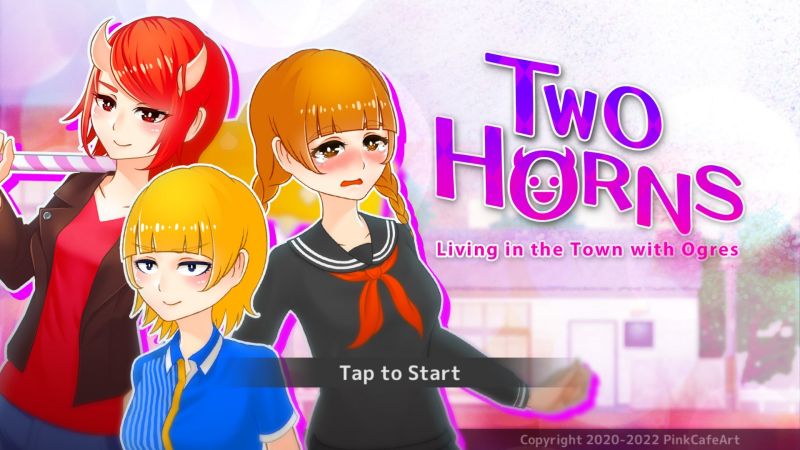
Two Horns places you in Oniga-town, a compact but layered city shaped by an old ogre legend, where a horned girl hands the protagonist a mysterious club and asks them to find her missing sister. Two Horns frames exploration as an open-ended sandbox: main scenarios introduce the story beats while an array of subquests and emergent interactions invite players to pursue combat, stealth, social manipulation, or creative experimentations with the environment and NPCs. The description below outlines how the game plays, what systems support choice, and what to expect from its tone and presentation.
The game emphasizes player agency through a permissive design that rewards curiosity rather than prescribing a single correct path. Main scenarios establish clear goals and key locations in Oniga-town, but subquests expand the town with side challenges and compact narratives that change depending on your approach. Combat and direct confrontation stand alongside stealth and trickery as viable options. Environmental interactions are central: interiors like public baths, alleys, workshops and cramped toilets can be investigated or used strategically to create opportunities and surprises.
Gameplay mixes action and simulation elements in a sandbox structure. Combat uses a simple hit-and-evade rhythm, while stealth relies on line-of-sight, sound cues and NPC routines that you can observe and exploit. Interaction systems let you pick up and use objects, experiment with clothing or props on characters, and trigger contextual scenes that alter NPC behavior. Two Horns encourages hands-on experimentation: the same objective can often be completed through force, by sneaking past guards, by distracting people, or by staging improvised scenes that change how others respond.
Controls are designed for touch devices with an intuitive virtual joystick for movement and context-sensitive buttons for actions, such as interact, attack, or hide. Control sensitivity and button placement are adjustable in the options so players can tailor the experience to their device and playstyle. Progression is scenario-driven rather than strictly level-based: completing main scenarios and subquests unlocks new areas, items and narrative branches. The mysterious club serves as a narrative anchor and a customizable tool whose upgrades and alternate uses are discovered through play rather than unlocked through abstract skill trees.
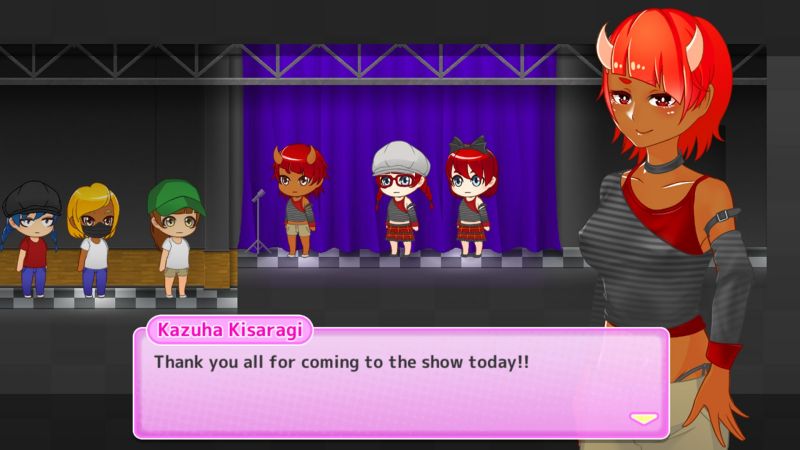
Oniga-town is presented with a focused aesthetic that pairs rustic, folkloric architecture with quirky, offbeat creature designs inspired by ogre myths. Levels are compact districts connected by narrow streets, interiors and hidden routes that invite repeated exploration. The town is designed to reveal secrets for players who pay attention to NPC routines and environmental details; small set pieces such as bathhouses, market stalls and private rooms are crafted to support multiple approaches and surprising interactions.
Customization in Two Horns is centered on items, outfits and staged interactions. Dressing up characters or equipping different gear can open new conversational options, alter how NPCs perceive you, and unlock alternative outcomes in quests. Because objectives can be approached in many ways and subquests branch differently based on your methods, replay value comes from trying new strategies, discovering hidden sequences, and seeing how the town responds to different provocations. The emergent nature of encounters makes each playthrough a potential source of unexpected moments.
The game offers adjustable difficulty and accessibility options aimed at improving comfort and control: adjustable input layouts, toggles for aim assistance in combat, and readable subtitles for dialogue-heavy scenes. Two Horns is a single-player experience that can be enjoyed offline once installed, so players can explore at their own pace without relying on an active network connection. Performance settings allow you to balance visual fidelity and battery use on a range of Android devices.
Challenge in Two Horns comes from reading the environment and choosing how to engage with systems and characters rather than from grinding or tightly gated progression. NPC AI follows routines that create windows of opportunity; detection meters, noise propagation and alert states provide clear feedback when stealth fails. The anything-goes sandbox can feel chaotic at times, which is part of the design, but it also rewards patient observation and creative problem solving. Players seeking tightly scripted progression may find the open structure unfamiliar, while those who enjoy emergent gameplay will appreciate the town's reactive possibilities.
Two Horns is aimed at players who enjoy exploration, experimentation and a willingness to test boundaries within a single-player sandbox. The game balances a story-driven premise with tools for improvisation, so whether you prefer to confront challenges head-on, slip through unnoticed, or craft elaborate schemes that change how characters react, Two Horns supports multiple approaches and surprises for those willing to look for them.
Cum in Out
Size:99.19M Casual2jbet Game
Size:12.94M CasualAlabell
Size:2016.37M CasualTrick or Ahri
Size:93.31M CasualRed snow
Size:216.55M CasualSumod.beta
Size:5.08M CasualTwo Weeks On
Size:123.18M CasualTightfault Revamp Edit
Size:1.14M CasualXSerum
Size:950.87M CasualDouble Homework - Remaster
Size:1310.88M CasualDevious Work : Demo
Size:92.25M CasualKnödel TD
Size:74.40M CasualApril 2024 Clash of Clans Update: Unveiling a Fresh Companion, Enhanced Levels, Chat Tagging, and Be
2024-04-16Arrival of Genshin Impact 4.6 Update: 'Embers of Two Realms, Twilight of Crimson'
2024-04-16V2.2 of the Farlight 84 update introduces an overhauled Season structure, fresh in-game currency, an
2024-04-16Monster Never Cry is now accessible on both Android and iOS mobile devices.
2024-04-18PUBG Mobile Teams Up with Bentley Motors: Luxury Cars, Exclusive Collectibles, and Beyond
2024-04-18March 2024 Free Redemption Codes for Honkai: Star Rail
2024-04-18