English
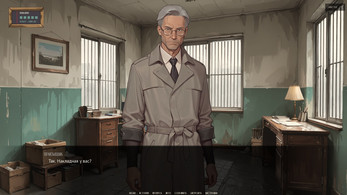
Don’t Ask is a minimalist puzzle-adventure that blends stealth, timing and social deduction into compact, self-contained levels. The game focuses on short scenarios where observation and inference matter more than fast reflexes, and it rewards deliberate choices and creative problem solving across a tense, slightly quirky atmosphere. Players move through tight spaces, study non-player characters, and experiment with timing to unlock different outcomes without relying on combat or sprawling mechanics.
The central loop in Don’t Ask is intentionally simple: enter a scene, watch NPC routines, pick an approach, and accept the consequences. Guards and civilians follow visible patterns and reaction thresholds that change from stage to stage, so a single hesitation or an unconventional distraction can shift an entire encounter. Mechanics include line-of-sight detection, noise propagation from interacting objects, and scene modifiers that alter NPC awareness or environmental features. These elements combine to produce emergent puzzles where planning and subtle improvisation are both viable strategies.
Controls are designed specifically for touch devices with an emphasis on clarity and responsiveness. Movement uses tap and drag gestures, context-aware prompts appear only when relevant, and a simple tool wheel lets you switch items with minimal fuss. The interface minimizes accidental inputs and offers adjustable control sensitivity to accommodate different screen sizes and player preferences. Because the game uses stylized assets instead of heavy post-processing, it runs smoothly across a wide range of devices, keeps load times short, and maintains a steady frame rate even when several entities are active in a scene.
Progression in Don’t Ask is centered on unlocking new scenarios and subtle modifiers rather than leveling up a character. Completing stages opens optional objectives, new environmental conditions, and small gameplay modifiers that change how familiar levels play. Customization comes from selecting modifiers and optional goals before a run: you can increase challenge by tightening guard vision cones, introduce additional civilian behaviors, or enable handy aids such as a one-time hint. These modifiers let experienced players tailor difficulty and encourage experimentation without introducing grind or artificial gates.
The visual language relies on high-contrast scenes and expressive silhouettes so that character intent and environmental affordances are readable at a glance. Minimal HUD elements keep the screen focused on the scene itself, and lighting and shadow are used pragmatically to support stealth rather than as decorative spectacle. Sound design complements sight by signaling changes in alertness, footsteps, and interactive devices; audio cues can serve as legitimate gameplay hints, and ambient tracks build tension in a restrained, supportive way.
Levels are short and deliberately self-contained, which makes Don’t Ask ideal for brief sessions or longer playtimes. Each stage is crafted with multiple viable solutions, hidden routes, and optional objectives that encourage repeated attempts. Replayability is driven by emergent behavior from NPC interactions, the placement of objects that create new opportunities when combined differently, and the scenario modifiers you unlock over time. Discovering an alternate approach or a subtle timing window is a common source of satisfaction in later stages.
The game offers a range of accessibility options to make scenes readable and controls comfortable: adjustable text and icon sizes, color contrast settings, and the ability to simplify on-screen information for players who prefer a cleaner view. Control sensitivity and hint frequency are configurable so the experience can be tuned for less dexterous players. Don’t Ask is fully playable offline; all core content and unlocked modifiers remain available without a network connection, making it suitable for travel and low-connectivity situations.
Challenge is handled through optional objectives, tiered scenario goals, and modifier combinations rather than a single difficulty slider. The introductory scenarios teach basic guard types and movement tactics, then later stages combine those elements into denser puzzles. In-game guidance is contextual and nonintrusive: brief on-screen prompts explain new mechanics when they appear and hints can be enabled or disabled independently of difficulty. This approach preserves the sense of discovery while reducing unnecessary frustration for new players.
Interface choices emphasize minimal friction so players can focus on puzzle solving. Short load times, clear visual feedback, and restrained menus reduce downtime between attempts. The developers provide periodic updates that add new scenarios, tweak balancing, and introduce small mechanics that expand replay possibilities without changing the core design. For players who enjoy deliberate, thoughtful encounters with strong design and repeatable challenges, Don’t Ask offers a compact, polished package built around clarity, choice, and careful level construction.




Cum in Out
Size:99.19M Casual2jbet Game
Size:12.94M CasualAlabell
Size:2016.37M CasualTrick or Ahri
Size:93.31M CasualRed snow
Size:216.55M CasualSumod.beta
Size:5.08M CasualTwo Weeks On
Size:123.18M CasualTightfault Revamp Edit
Size:1.14M CasualXSerum
Size:950.87M CasualDouble Homework - Remaster
Size:1310.88M CasualDevious Work : Demo
Size:92.25M CasualKnödel TD
Size:74.40M CasualApril 2024 Clash of Clans Update: Unveiling a Fresh Companion, Enhanced Levels, Chat Tagging, and Be
2024-04-16Arrival of Genshin Impact 4.6 Update: 'Embers of Two Realms, Twilight of Crimson'
2024-04-16V2.2 of the Farlight 84 update introduces an overhauled Season structure, fresh in-game currency, an
2024-04-16Monster Never Cry is now accessible on both Android and iOS mobile devices.
2024-04-18PUBG Mobile Teams Up with Bentley Motors: Luxury Cars, Exclusive Collectibles, and Beyond
2024-04-18March 2024 Free Redemption Codes for Honkai: Star Rail
2024-04-18