English
Ultimate Trainer is a character-focused simulation that places you in the role of a summoner and mentor, guiding a roster of virtual girls through training, customization, and team development. Ultimate Trainer opens with a concise onboarding that explains the core loop: summon characters, train their abilities, and refine their appearance and role to match your tactical preferences. This introduction presents the game's main pillars in a clear, editor-style overview so prospective players understand how progression, customization, and long-term development fit together.
The gameplay centers on recruiting a diverse cast of characters and investing resources to improve their statistics and unlock new options. Players engage in short training sessions and longer development plans that influence growth paths; these activities are designed to be approachable in brief play sessions while still offering measurable progress across weeks of play. Encounters and scenarios are structured to encourage experimentation with different team compositions, and the game rewards deliberate decisions in character development rather than relying solely on chance.
Controls are optimized for mobile: touch-driven menus, drag-and-drop placement for team selection, and simple taps to initiate training routines. The user interface prioritizes clarity with readable progression bars, straightforward confirmation dialogs, and contextual tips during early play. Editors and testers found the control flow intuitive for first-time players, with tooltips available to explain any mechanic that may not be immediately obvious.
Progression in Ultimate Trainer is persistent and cumulative, rewarding time spent improving characters with new customization options and incremental stat gains. Training disciplines focus on developing specific roles so each character can evolve into a niche—such as support, frontline, or specialist—based on how you allocate training time. Balance is achieved through diminishing returns on repeated training of the same attribute, encouraging diversified development and strategic planning rather than repetitive grinding.
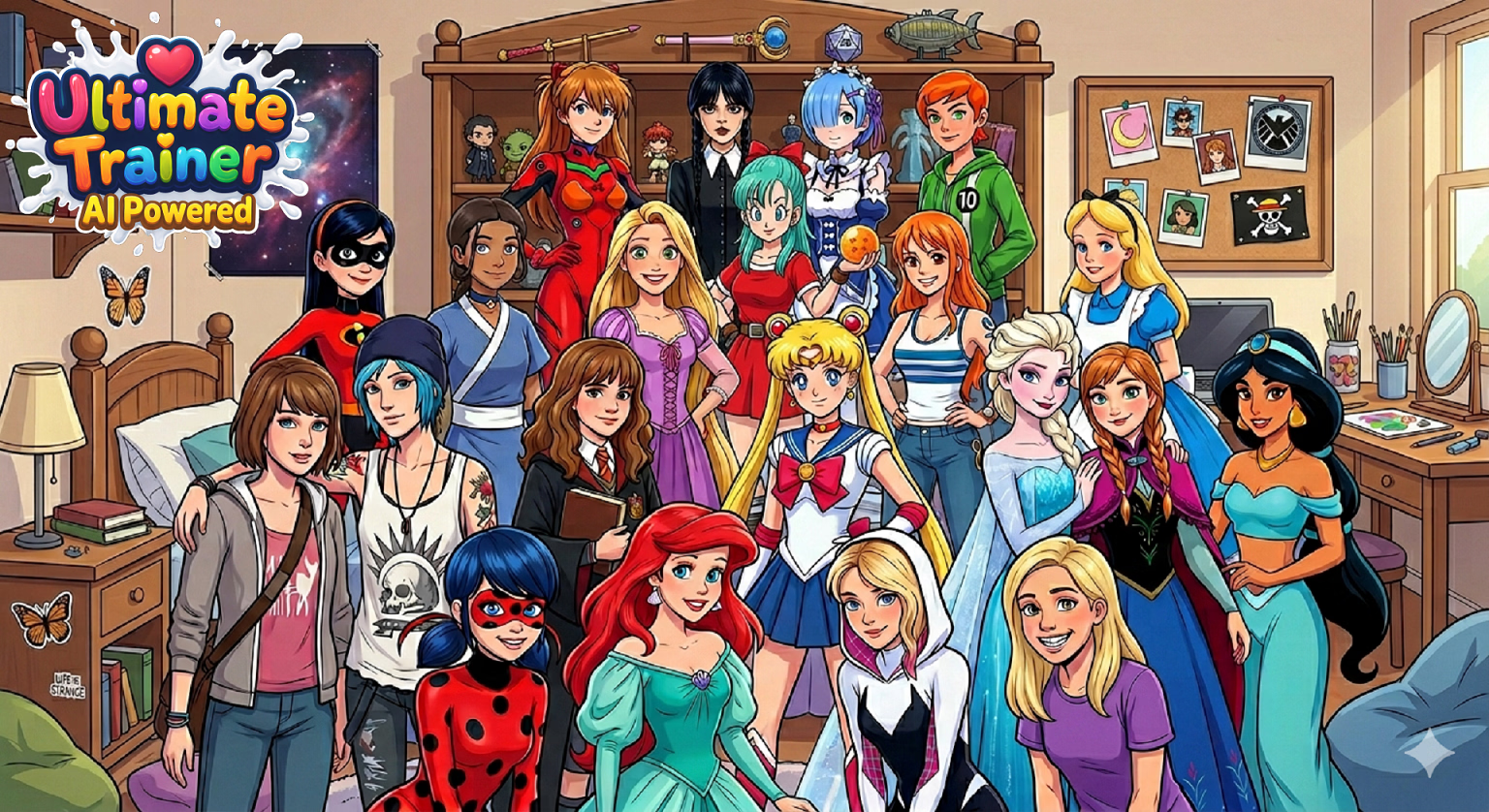
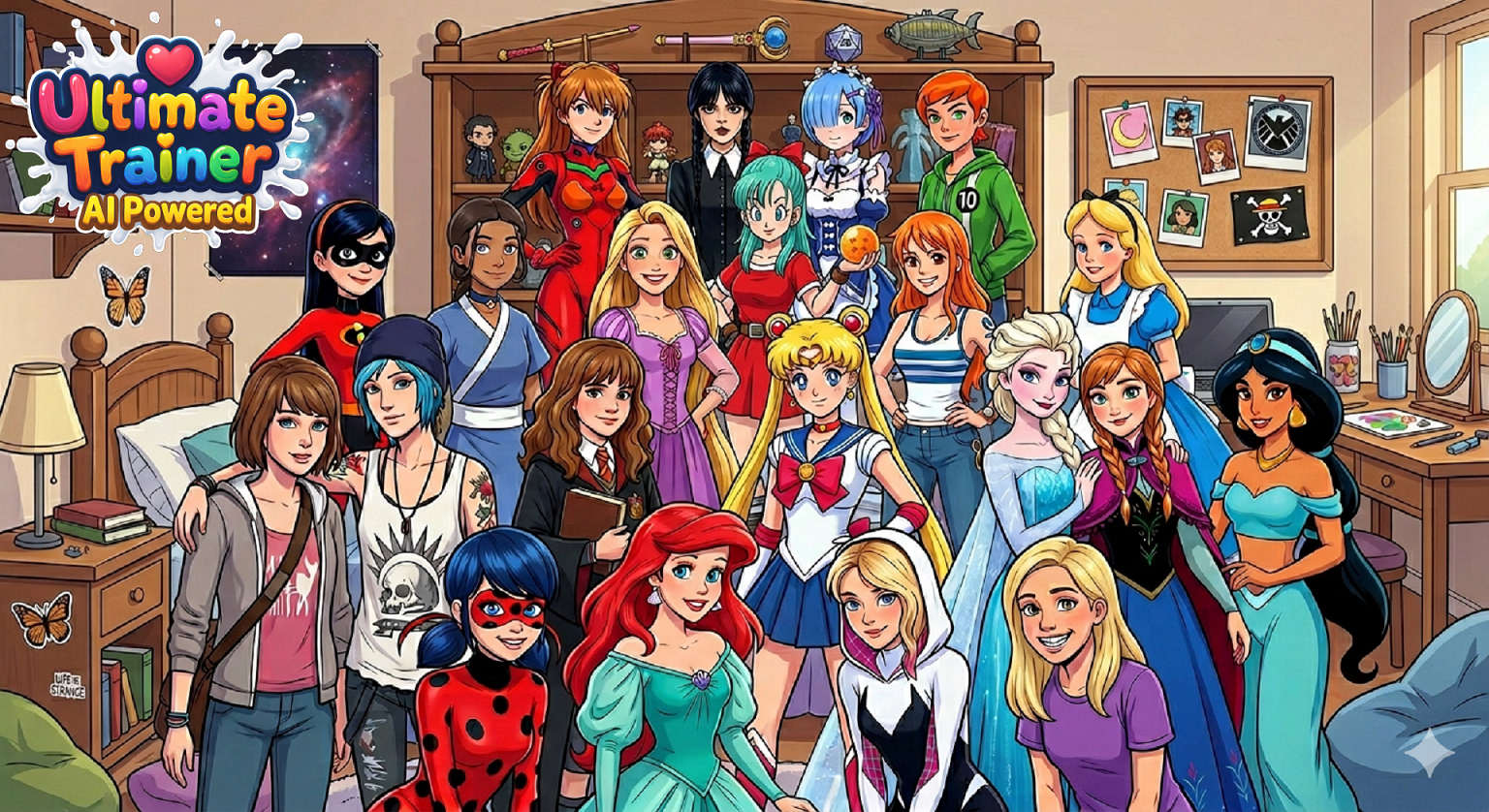
The visual approach blends stylized character artwork with clean menus and readable text, creating an accessible aesthetic that emphasizes character portraits and costume choices. Animations are used sparingly to highlight recruitment moments and progression milestones, while most interactions rely on static art and clear iconography to maintain performance across a wide range of devices. The presentation is intended to support the collection and customization experience without overwhelming the player with unnecessary visual complexity.
Content is organized into discrete scenarios and challenge nodes that players can access with their trained teams. These encounters scale in difficulty so that newcomers can progress through introductory content while experienced players encounter progressively tougher challenges that require more thoughtful team-building. Challenge nodes often emphasize counters and synergies, encouraging players to adjust compositions and training focuses rather than employ a single dominant strategy.
Customization covers both cosmetic choices and role definition: players can alter outfits and visual elements to create distinct looks, while training options let you emphasize particular stats or abilities to define each character’s role. Team building benefits from these choices because complementary roles and visual differentiation make it easier to plan tactics and track each character’s function during play. This system supports personalization without adding unnecessary complexity to core mechanics.
Replayability arises from the variety of recruitment outcomes and the branching nature of development paths. Because training choices accumulate and influence later options, players can re-create new rosters with different focuses to explore alternate strategies. The game design encourages seasonal or periodic engagement through content that can be completed at a steady pace, rewarding consistent investment rather than short bursts of play.
Ultimate Trainer aims to be accessible to a broad audience with adjustable text sizes, readable color contrasts, and simplified controls that work for casual sessions. Many features are available offline so players can continue training and reviewing progression without a constant network connection; synchronization occurs when a connection is restored. The app also includes basic accessibility options to improve readability and ease of use for players who prefer a slower pace or require assistive settings.
The editor recommends players review in-app explanations and tooltips for detailed mechanics, and notes that transparency around progression and training outcomes helps new users plan effectively. Ultimate Trainer is presented here as a character-collection and development experience that focuses on player choice, steady progression, and visual customization, offering a clear preview of what to expect before downloading.






Cum in Out
Size:99.19M Casual2jbet Game
Size:12.94M CasualAlabell
Size:2016.37M CasualTrick or Ahri
Size:93.31M CasualRed snow
Size:216.55M CasualSumod.beta
Size:5.08M CasualTwo Weeks On
Size:123.18M CasualTightfault Revamp Edit
Size:1.14M CasualXSerum
Size:950.87M CasualDouble Homework - Remaster
Size:1310.88M CasualDevious Work : Demo
Size:92.25M CasualKnödel TD
Size:74.40M CasualApril 2024 Clash of Clans Update: Unveiling a Fresh Companion, Enhanced Levels, Chat Tagging, and Be
2024-04-16Arrival of Genshin Impact 4.6 Update: 'Embers of Two Realms, Twilight of Crimson'
2024-04-16V2.2 of the Farlight 84 update introduces an overhauled Season structure, fresh in-game currency, an
2024-04-16Monster Never Cry is now accessible on both Android and iOS mobile devices.
2024-04-18PUBG Mobile Teams Up with Bentley Motors: Luxury Cars, Exclusive Collectibles, and Beyond
2024-04-18March 2024 Free Redemption Codes for Honkai: Star Rail
2024-04-18