English
Sukidarake! Living Together with My Aunt and Cousin presents a narrative-driven life simulation that focuses on everyday routines, personal growth, and the dynamics of a shared household while maintaining a clearly non-romantic, family-friendly tone suitable for general audiences. Players step into a cozy domestic setting where the emphasis is on time management, friendship, and character development rather than any explicit or sexual material, and the writing deliberately frames relationships as platonic and supportive.
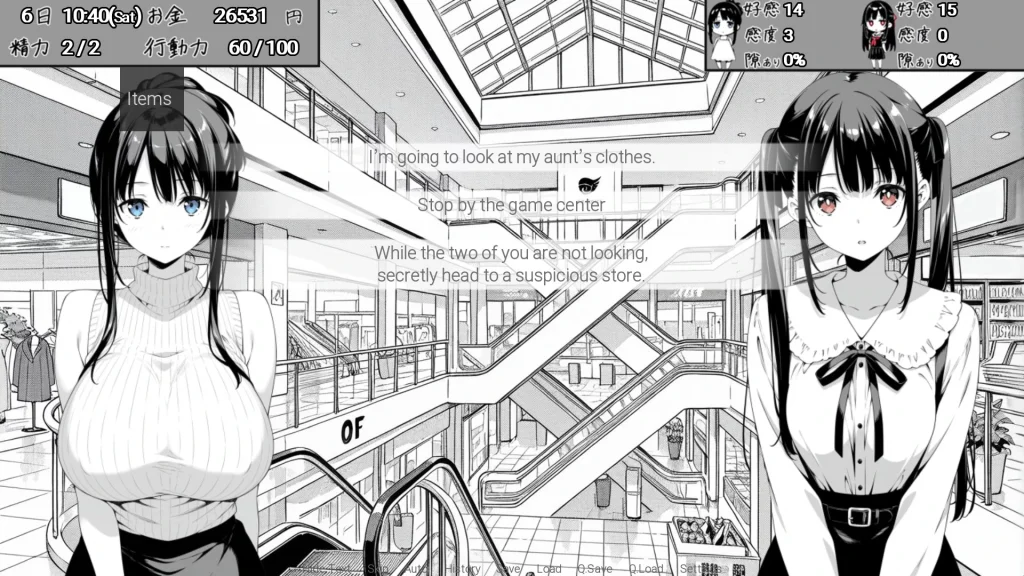
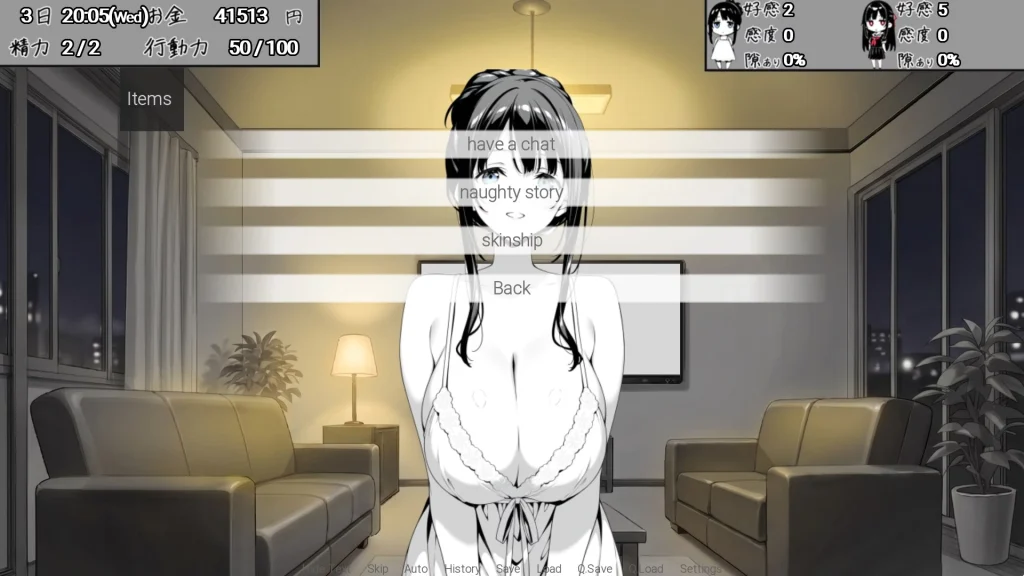
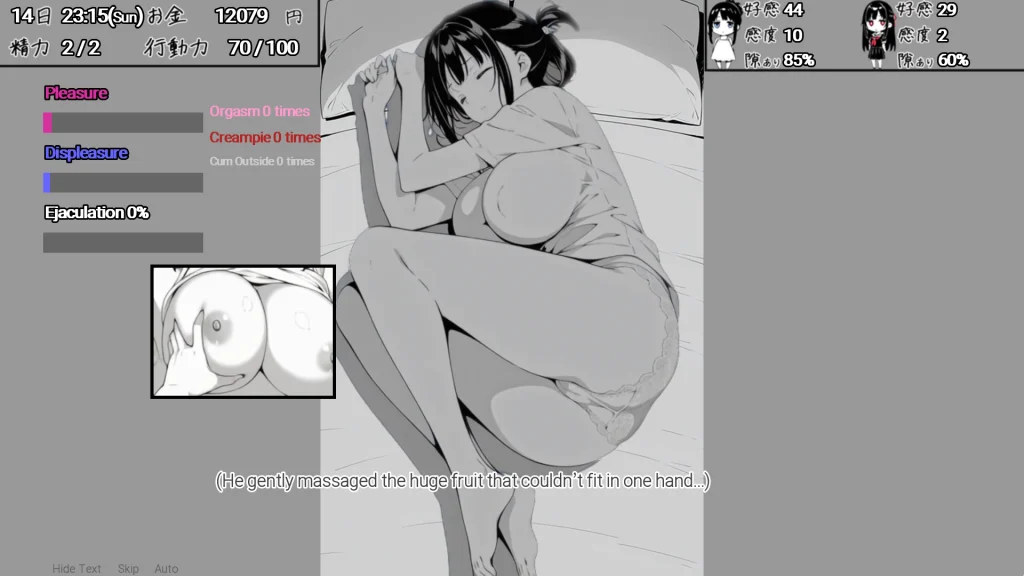
At its core Sukidarake! Living Together with My Aunt and Cousin combines choice-led storytelling with light simulation systems. A calendar advances the plot by unlocking events and short scenarios on specified days or after certain in-game conditions are met. Relationship meters measure trust and familiarity in non-romantic ways, influencing which everyday scenes become available. Short household mini-games and routine tasks break up dialogue sections and contribute to a steady sense of progression. Multiple endings and hidden episodes reward exploration and careful scheduling, and visual variations reflect changes in household comfort and character moods.
Progression is driven by daily decision-making and routine management. Each simulated day presents a set of tasks that determine how much free time you have to pursue conversations, personal projects, or event triggers. Completing chores and mini-games raises household comfort and occasionally grants small items or bonuses that open alternate story paths. Affinity or familiarity thresholds trigger special episodes that reveal backstory, and replaying with different priorities will surface new branches. The calendar encourages planning across weeks, so players who like methodical scheduling can work toward particular outcomes.
The writing emphasizes believable, layered characters whose routines, hobbies, and reactions evolve as trust grows. Interactions are written to feel like natural domestic exchanges: shared meals, conversations about work or hobbies, and milestone moments that reveal motivations and history. The narrative balances quiet slice-of-life scenes with occasional interpersonal tension and character growth, and special episodes provide contextual background that reinterprets earlier choices without sensationalizing relationships.
While the simulation layer is deliberately approachable, there is meaningful strategy in how you allocate time and resources. Players decide whether to complete tasks that free up time for story exposure or to focus on boosting familiarity with a particular household member to unlock exclusive scenes. Managing moods, simple finances, and supplies creates trade-offs: neglect reduces the chance of event triggers, while steady attention and smart task selection unlock deeper content. Optional challenge modes in mini-games offer tighter timing and higher score rewards for players who want more mechanical challenge.
The presentation favors clarity and atmosphere over flashy effects. Expressive character art and detailed interior backgrounds create a warm, lived-in feeling, with subtle animations to indicate time of day and shifting moods. A gentle piano-based soundtrack and ambient soundscapes support quieter moments, and restrained sound cues help communicate the consequences of choices. The UI is designed for legibility, offering high-contrast text options and a tidy layout that keeps attention on dialogue and character expressions.
Controls are optimized for touch devices: tap to advance text, swipe to skip or navigate menus, and simple touch interactions for mini-games. The interface is responsive and suitable for both short sessions and longer play periods, with quick scene loading and modest memory requirements so the title runs smoothly on a broad range of phones and tablets. Performance tuning minimizes background asset loading where possible, and the game is fully playable offline so you can manage the household and story without an internet connection.
The game includes accessibility options to make the experience more welcoming: adjustable text size, color contrast modes, and options to skip or auto-advance dialogue. Save slots and early checkpoints allow players to experiment and explore alternate paths without losing progress. Visual customization is modest and consistent with the narrative focus, letting players adjust small aspects of the living space and select outfit variants that reflect progression and household comfort rather than serve as a gameplay requirement.
Sukidarake! Living Together with My Aunt and Cousin rewards curiosity and varied playstyles. Trying different daily schedules, prioritizing different activities, or focusing on particular characters will reveal new episodes and alternate endings. Pay attention to routines and choose moments when characters are most receptive to conversation; small, incidental choices can unlock branches later. For players who appreciate narrative choices layered over light simulation, the game offers a measured, approachable experience with plenty of reasons to revisit and uncover additional scenes and outcomes.


Cum in Out
Size:99.19M Casual2jbet Game
Size:12.94M CasualAlabell
Size:2016.37M CasualTrick or Ahri
Size:93.31M CasualRed snow
Size:216.55M CasualSumod.beta
Size:5.08M CasualTwo Weeks On
Size:123.18M CasualTightfault Revamp Edit
Size:1.14M CasualXSerum
Size:950.87M CasualDouble Homework - Remaster
Size:1310.88M CasualDevious Work : Demo
Size:92.25M CasualKnödel TD
Size:74.40M CasualApril 2024 Clash of Clans Update: Unveiling a Fresh Companion, Enhanced Levels, Chat Tagging, and Be
2024-04-16Arrival of Genshin Impact 4.6 Update: 'Embers of Two Realms, Twilight of Crimson'
2024-04-16V2.2 of the Farlight 84 update introduces an overhauled Season structure, fresh in-game currency, an
2024-04-16Monster Never Cry is now accessible on both Android and iOS mobile devices.
2024-04-18PUBG Mobile Teams Up with Bentley Motors: Luxury Cars, Exclusive Collectibles, and Beyond
2024-04-18March 2024 Free Redemption Codes for Honkai: Star Rail
2024-04-18