English
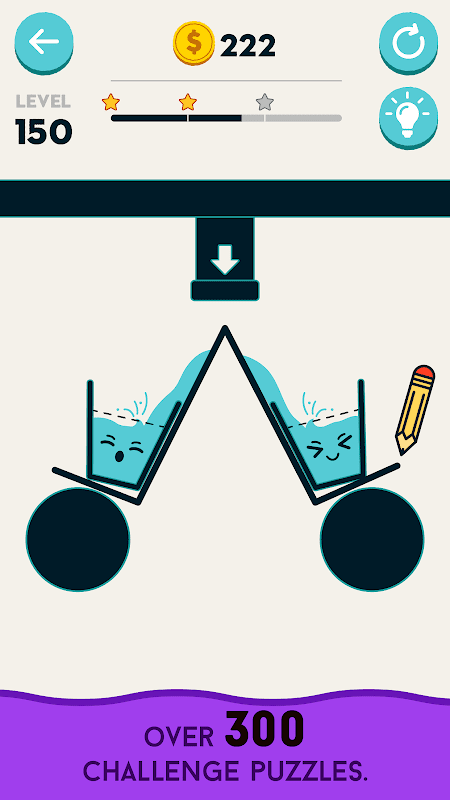
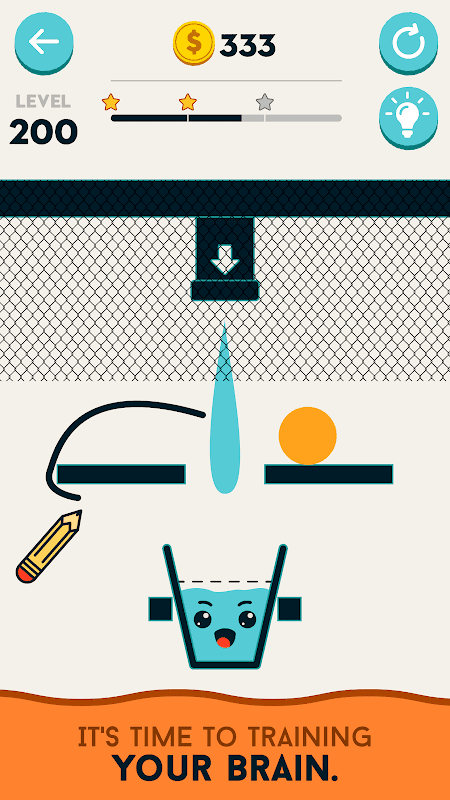
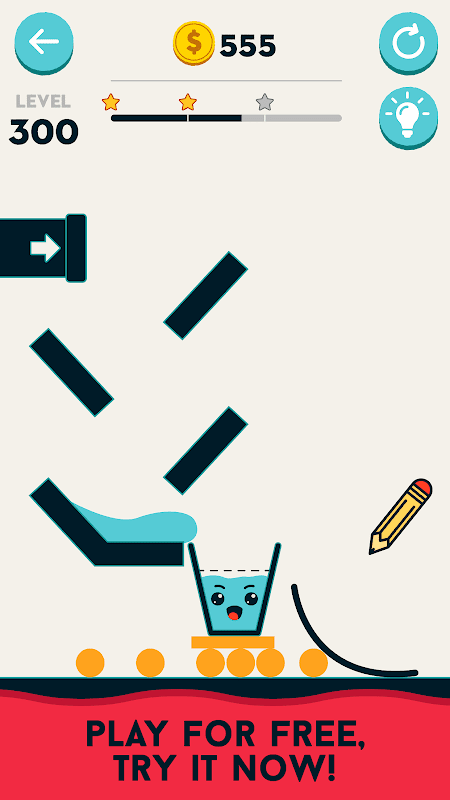
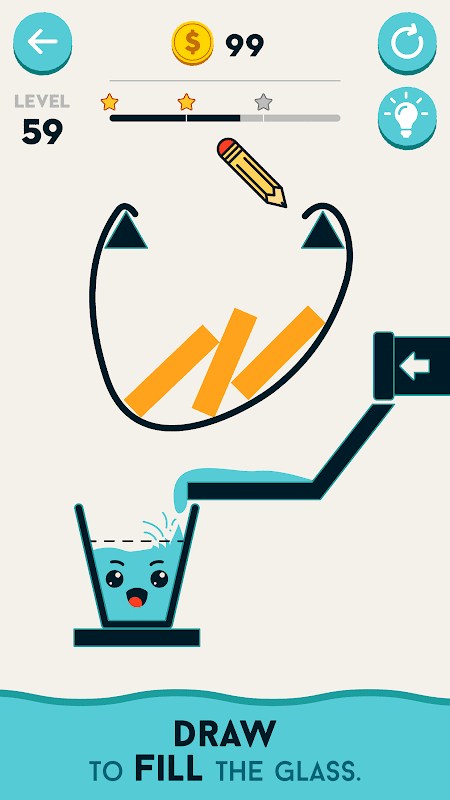
Fill the glass is a casual physics puzzle that asks you to draw simple lines and shapes to guide flowing water into a waiting cup across dozens of handcrafted levels. In this editor overview we describe what makes Fill the glass approachable and engaging: one-touch sketching, realistic fluid behavior, and a gradual learning curve that rewards curiosity and experimentation rather than memorization.
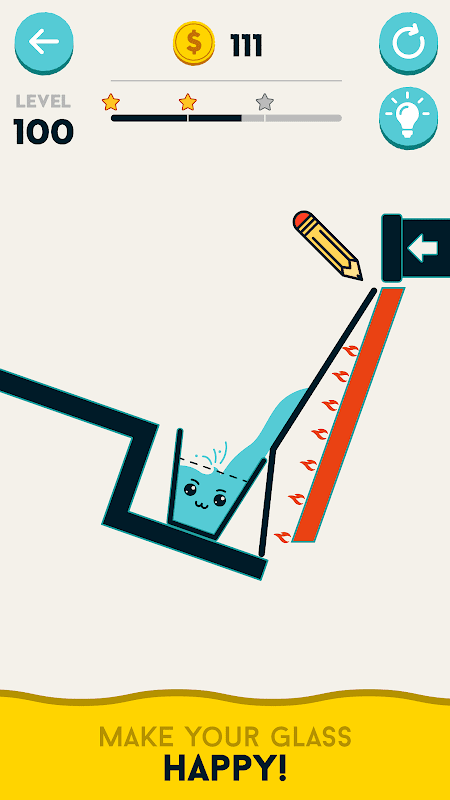
At its core the gameplay centers on drawing temporary ramps, barriers and guides that interact with a convincing fluid simulation. You sketch directly on the playfield and then release to let gravity, collisions and momentum determine the liquid’s path. The simulation reacts to slopes, splashes and pooling, which produces visible cause-and-effect interactions that help players learn by observing outcomes. Levels are designed so there are often multiple valid solutions; that encourages players to test different approaches — for example, using a gentle curve to steer flow versus a short barrier to block a spill — and to think in terms of flow management rather than a single fixed answer.
Controls are intentionally simple: touch and drag to draw, lift to let the water move. The interface keeps controls unobtrusive so the play area remains clear, while visual feedback shows where a new line will affect the liquid. Line previews, subtle animations when water contacts a drawn shape, and responsive touch handling help the game feel precise on both small phones and larger tablets. Small quality-of-life options let you adjust drawing sensitivity and toggle a lightweight undo so you can refine strokes without restarting a level from scratch.
Levels are grouped to teach mechanics incrementally: early stages introduce slopes and basic barriers, middle chapters add moving obstacles and confined channels, and advanced puzzles combine timing, limited drawing space and multiple water sources. The game contains over a hundred handcrafted challenges that progress from quick brainteasers to multi-stage puzzles requiring planning and timing. Occasional bonus levels encourage creative or minimal-stroke solutions and are a good way to test alternative strategies developed earlier in the game.
The presentation favors a clean, colorful aesthetic that keeps attention on the flow and interactions rather than flashy effects. Water motion and particle details are rendered clearly so you can judge trajectories, and soft background palettes reduce visual noise. Sound design supports concentration with simple splash effects and unobtrusive ambient music; audio settings allow you to lower or mute music and sound effects independently to suit different play environments.
While the mechanics remain focused and minimal, a few customization options help tailor the experience. You can adjust drawing thickness, enable or disable a line preview, and choose a compact or full HUD to match screen size preferences. Difficulty is primarily tuned through level design rather than adjustable sliders, but the built-in hint system offers graded nudges that preserve the opportunity to discover solutions while reducing frustration when you’re stuck.
Replayability comes from level layouts that accept multiple solutions and from personal goals such as using fewer strokes, faster completion, or discovering elegant workarounds. Many puzzles invite iteration: try a different ramp shape, change the timing of a drop, or experiment with temporary barriers to reroute flow. These open-ended problems encourage repeat attempts and reward players who refine strategies over time. Difficulty spikes are deliberate and paired with hints so progression feels steady rather than abrupt.
Fill the glass keeps accessibility and convenience in mind through clear visual cues, straightforward controls and progressive difficulty that eases new players into mechanics. The game runs offline, making it suitable for commutes and travel, and performance optimizations aim to keep responsiveness consistent across devices. Readable icons, adjustable control sensitivity and optional sound controls help accommodate a range of player preferences and environments.
The developer provides regular updates that add new levels, refine balance and improve performance across device types. Small, incremental improvements focus on smoothing the play experience and expanding level variety without changing core mechanics. If you enjoy calm, inventive puzzles with intuitive drawing and surprising depth, Fill the glass offers steady additions and practical settings that keep the experience fresh while respecting how people prefer to play.
My Dream Store
Size:215.30M PuzzleFlying Rahul Gandhi
Size:4.95M PuzzleMerge Magic!
Size:42.97M PuzzleClockmaker
Size:150.52M PuzzleWhere's My Perry?
Size:41.60M PuzzleMonument Valley 2
Size:282.69M PuzzleMerge Neon Car
Size:136.75M PuzzleCubeX - Solver, Timer, 3D Cube
Size:16.87M PuzzleMatch Factory
Size:228.55M PuzzleAntistress - relaxation toys Mod
Size:122.55M PuzzleMergic: Merge & Magic
Size:150.68M PuzzleMerge Mystery : Resort
Size:169.60M PuzzleApril 2024 Clash of Clans Update: Unveiling a Fresh Companion, Enhanced Levels, Chat Tagging, and Be
2024-04-16Arrival of Genshin Impact 4.6 Update: 'Embers of Two Realms, Twilight of Crimson'
2024-04-16V2.2 of the Farlight 84 update introduces an overhauled Season structure, fresh in-game currency, an
2024-04-16Monster Never Cry is now accessible on both Android and iOS mobile devices.
2024-04-18PUBG Mobile Teams Up with Bentley Motors: Luxury Cars, Exclusive Collectibles, and Beyond
2024-04-18March 2024 Free Redemption Codes for Honkai: Star Rail
2024-04-18