English
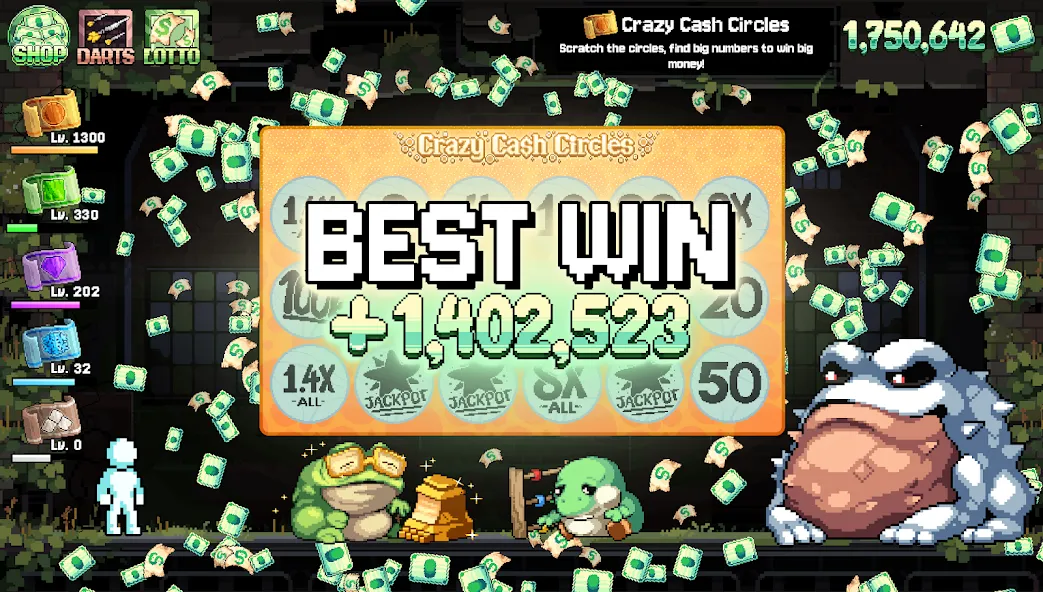
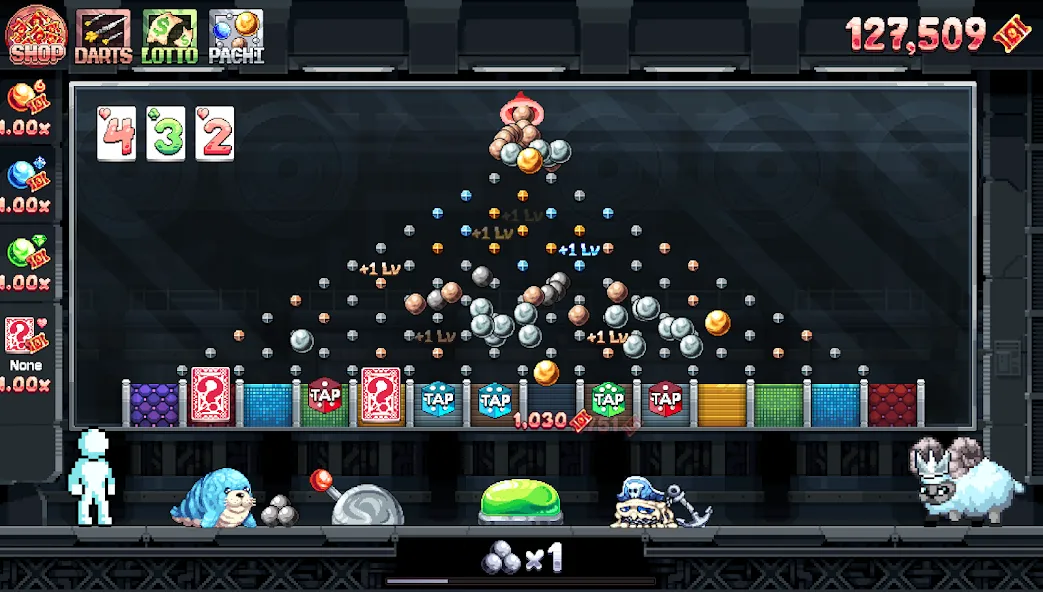
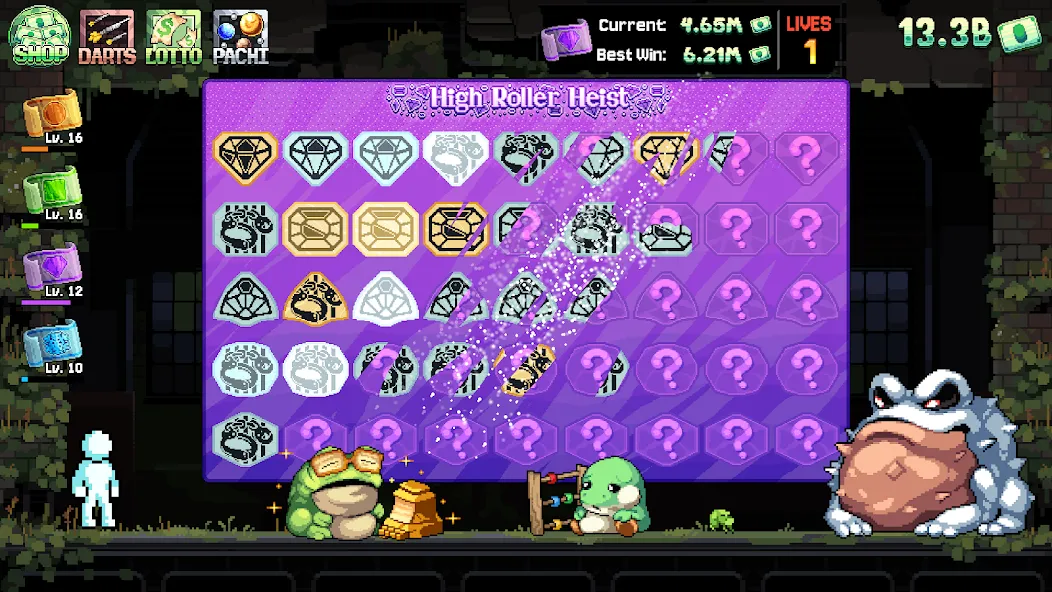
Fortune Mill is a casual incremental game that places you in charge of a strange little money factory where the objective is to grow income, recruit oddball creatures, and eventually hit $1,000,000 to unlock New Game+ and bonus modes. Fortune Mill blends chance-based mini-games with an expansive upgrade tree so progression feels both unpredictable and strategic; players will spin darts, scratch tickets and toss marbles to win cash, experience and occasional items that change how individual rooms behave.
The core loop in Fortune Mill alternates between short, chance-driven mini-games and longer-term planning through upgrades and room interactions. Each mini-game is resolved quickly and rewards money or experience based on randomized outcomes, but the resources you earn fuel a larger web of investments: room upgrades, creature recruitment, and permanent nodes in a branching upgrade map. Because outcomes are randomized, success often depends on making choices that amplify positive swings and mitigate losses across the mill’s systems.
Controls are intentionally simple and optimized for mobile play: tap to play mini-games, drag to arrange certain room elements, and tap-and-hold on upgrade nodes for details. The interface groups related controls so you can switch quickly between earning cash and managing the upgrade tree; visual feedback is provided for every action so it’s easy to see which rooms are producing income, what modifiers are active, and when a creature ability is triggering. Touch targets are sized to reduce mis-taps on smaller devices.
Progression centers on multiple intersecting systems: a currency economy, experience-driven unlocks, and a persistent upgrade tree of over 220 nodes. Some nodes modify base mechanics, while others create cross-room synergies that change how income scales. Resource scarcity is deliberate—upgrade materials are limited compared to cash—so choices matter and planning ahead rewards players who experiment with different paths. Reaching the $1,000,000 goal opens New Game+ and bonus modes that preserve selected upgrades while resetting base income, encouraging alternative strategies and deeper exploration of synergies.
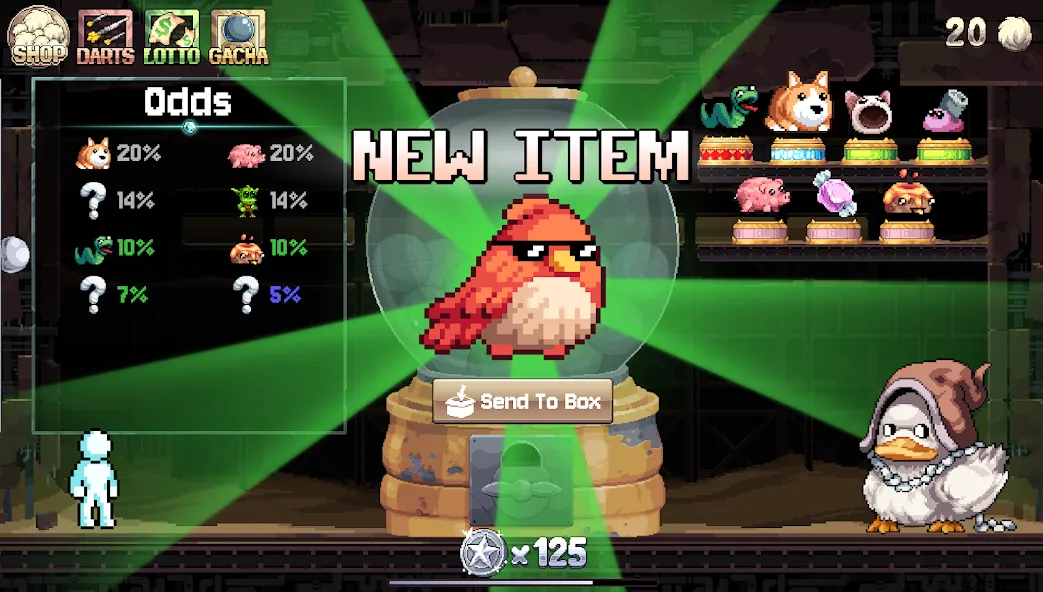
The game presents a light-hearted, quirky art direction with stylized rooms and distinct creature designs that emphasize personality over realism. Visual cues are used to distinguish room mechanics so you can quickly identify where to spend resources or which upgrades will interact best. Fortune Mill’s five primary rooms each introduce a unique mechanic and level progression: as you invest in a room its effects grow and interact with other areas of the mill, creating emergent combinations that redefine how wealth is generated.
Recruitable creatures add tactical depth: each creature provides specific bonuses that scale with your current upgrades and room investments. For example, a creature like the Machine-Gun Mouse grants rapid-fire passive bonuses that pair well with certain room effects. Customization comes through selecting which creatures to recruit, which upgrade nodes to unlock, and which room-specific items to purchase; those decisions shape a playstyle that can favor steady passive income, high-variance bursts from mini-games, or intricate cross-room combos.
Replayability is driven by the upgrade tree variety, New Game+ options, and the randomized nature of the mini-games. The chance-based mechanics introduce variability so each run feels different, while the deep upgrade map and cross-room synergies reward experimentation. The game also includes challenge dynamics: limited upgrade resources push you to make meaningful trade-offs, and the randomness of mini-games creates tension for players who prefer more predictable progress, offering a balance between planning and improvisation.
The interface emphasizes readability and quick feedback, with clear labels for currency types, upgrade costs and active modifiers. Fortune Mill supports short play sessions and is friendly to offline play—earnings and progression persist between sessions so you can return to the mill without needing a constant connection. Basic accessibility considerations include adjustable font scaling and high-contrast UI elements to help players with visibility needs; these design choices aim to make the game approachable across a wide range of devices.
Some players have reported that tapping an upgrade node to view details can occasionally trigger an immediate purchase without a confirmation prompt; this is a known usability issue to be mindful of when spending rare resources. Because upgrade materials are relatively scarce, a common strategy is to focus early investments on synergies that multiply returns across rooms rather than on many small, isolated boosts. Regularly experimenting with different creature combinations will reveal how certain bonuses interact with room effects, and trying New Game+ runs helps highlight alternative upgrade paths.
My Dream Store
Size:215.30M PuzzleFlying Rahul Gandhi
Size:4.95M PuzzleMerge Magic!
Size:42.97M PuzzleClockmaker
Size:150.52M PuzzleWhere's My Perry?
Size:41.60M PuzzleMonument Valley 2
Size:282.69M PuzzleMerge Neon Car
Size:136.75M PuzzleCubeX - Solver, Timer, 3D Cube
Size:16.87M PuzzleMatch Factory
Size:228.55M PuzzleAntistress - relaxation toys Mod
Size:122.55M PuzzleMergic: Merge & Magic
Size:150.68M PuzzleMerge Mystery : Resort
Size:169.60M PuzzleApril 2024 Clash of Clans Update: Unveiling a Fresh Companion, Enhanced Levels, Chat Tagging, and Be
2024-04-16Arrival of Genshin Impact 4.6 Update: 'Embers of Two Realms, Twilight of Crimson'
2024-04-16V2.2 of the Farlight 84 update introduces an overhauled Season structure, fresh in-game currency, an
2024-04-16Monster Never Cry is now accessible on both Android and iOS mobile devices.
2024-04-18PUBG Mobile Teams Up with Bentley Motors: Luxury Cars, Exclusive Collectibles, and Beyond
2024-04-18March 2024 Free Redemption Codes for Honkai: Star Rail
2024-04-18