English
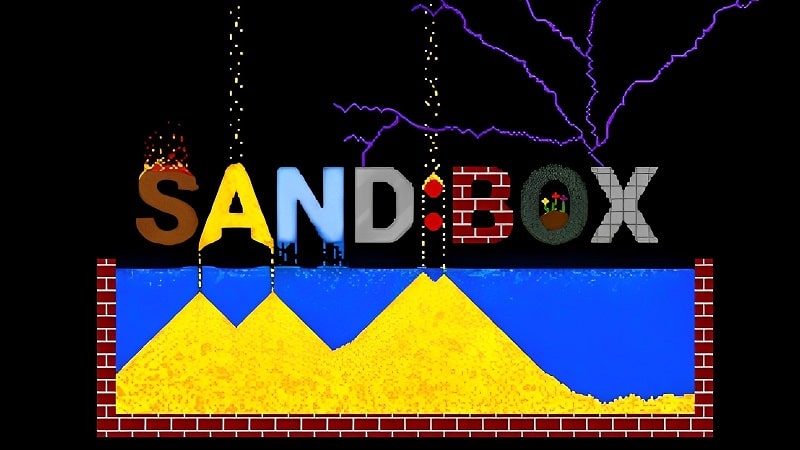
caja:arena is a free sandbox simulation game that gives players an open creative playground to mix materials, build structures and test physics-driven interactions for relaxation or casual play. The experience centers on experimenting with more than 50 material types and over 1,000 design options so you can combine elements like water, lava, sand, gasoline and explosives to observe how they react. The app emphasizes simple, stress-free play: sessions are offline and ad-free, controls are touch-first and accessible, and the world is intentionally open-ended so you choose what to make or discover.
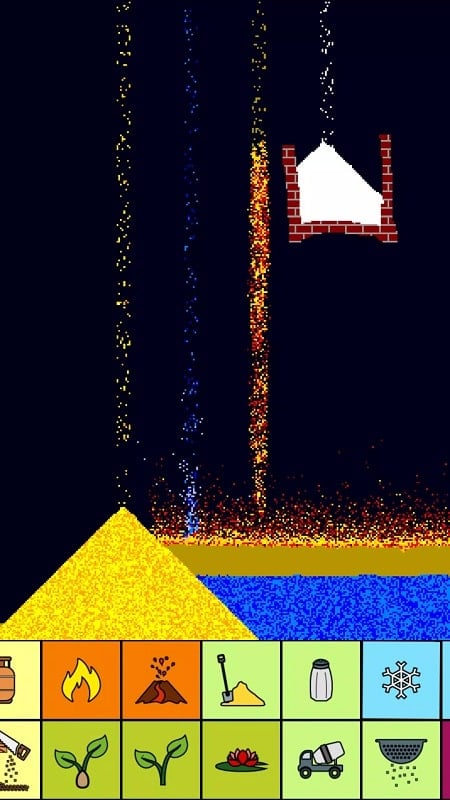
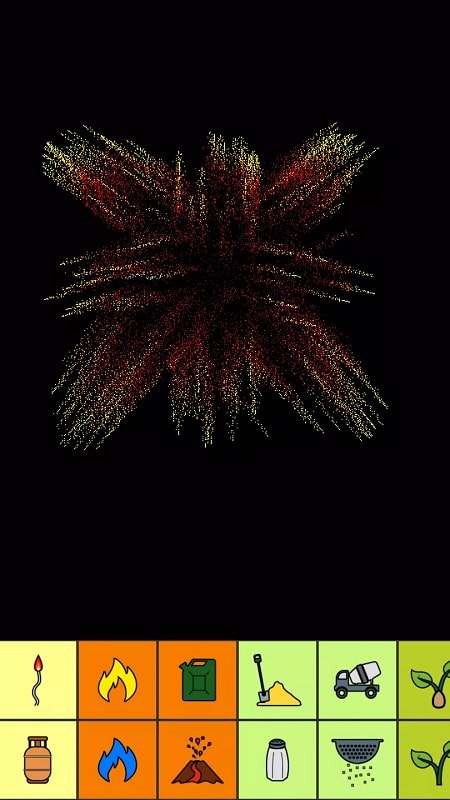
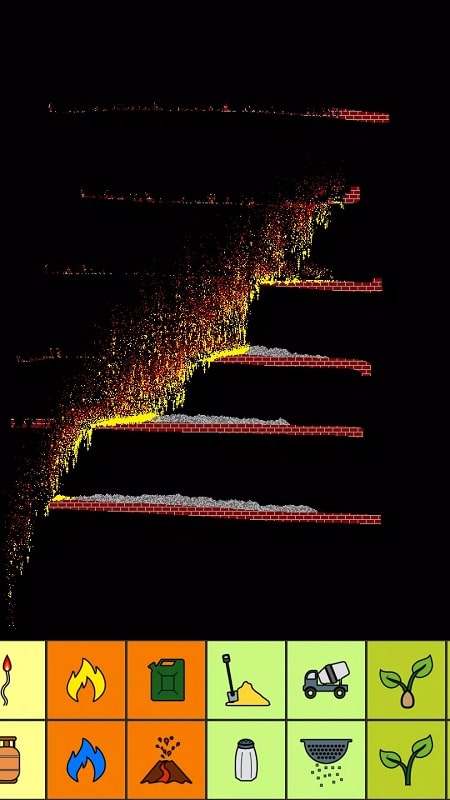
The core mechanic in caja:arena is material interaction. Each substance has properties — flow, burn, solidity, volatility — that determine how it behaves when placed next to others. You can create slow-moving rivers of water, cascading sand dunes, chemical reactions when fuels meet flames, or dramatic chain reactions with explosives. Building is unrestricted: place blocks, dig channels, and layer materials to compose living dioramas or controlled experiments. The physics engine responds to mass, gravity and contact forces, so small adjustments to placement or timing can produce very different outcomes. This emergent approach rewards curiosity rather than compliance with fixed objectives.
Controls are designed to be intuitive on touchscreen devices. Basic interactions use tap, drag and drop to position materials and reshaping gestures to erase or smooth terrain. Common editing tools such as an eraser and undo help you refine creations without frustration. The interface aims to be readable on both phones and tablets with clear icons, large touch targets and a minimal HUD so the simulation remains the focus. Because play is offline and local, there’s no account setup required — just open the app and begin experimenting.
Rather than a structured progression or level ladder, caja:arena offers an open-ended sandbox that encourages player-defined goals. You won’t find achievement lists or rankings; instead, progression is self-directed: you can iterate on designs, attempt timed experiments for your own challenge, or recreate real-world phenomena to test hypotheses. This model supports creative learning and exploratory play, where skill comes from understanding material behavior and refining your techniques rather than unlocking content through linear advancement.
Visually the game favors clear, readable representations of materials and interactions. Particles, color coding and simple lighting are used to indicate temperature, pressure and movement so it’s easy to see cause and effect at a glance. The sandbox can be treated like a single large level with areas you carve into different test beds — from wide, beach-like expanses of sand to compact lab-style corners for concentrated experiments. These flexible spaces let you scale projects from small demonstrations to sprawling mechanical or chemical scenes.
The extensive library of objects and over 1,000 design options give you a broad palette for customization without overwhelming beginners. Materials can be layered and combined in sequences to produce predictable or surprising outcomes, and the built-in eraser and placement precision allow for delicate edits. While there are many options, the interface aims to keep them approachable so you can focus on design decisions rather than menu navigation.
Replayability comes from the nearly infinite permutations of material combinations and the creative challenges you set for yourself. You might spend one session inventing a functional water canal and another testing incendiary chains that ripple through the scene. Because the app runs offline and without ads, sessions remain private and uninterrupted, which supports longer, concentrated creative blocks. The game’s simplicity also makes it suitable for short bursts of play when you want to unwind.
Designed to run on a wide range of Android devices, caja:arena favors lightweight assets and a compact install so it works smoothly on many phones and tablets. The minimal reliance on online services reduces power draw and keeps the experience stable on slower networks or when offline. Simple control schemes and clear visual cues help make the game approachable for players of varying ages and abilities.
Because the focus is on sandbox experimentation, caja:arena does not include competitive modes, online leaderboards, or a formal progression system. Players who prefer structured objectives, tournaments, or persistent online features may find the experience too open-ended. However, for those who enjoy self-directed creativity, the wide material library and responsive physics provide a deep, replayable environment for exploration and informal learning.
Farm Town: Merge Cozy Village
Size:177.00M SimulationSpeed Moto Dash:Real Simulator
Size:255.00M SimulationMA 2
Size:85.22M SimulationStates Builder: Trade Empire
Size:105.18M SimulationLEGO® Juniors Create & Cruise
Size:72.90M SimulationParadise Lust 3
Size:2178.00M SimulationJoy Pony
Size:20.40M SimulationStuck with My Ex’s Family and Zombies!?
Size:270.00M SimulationFreshman
Size:177.00M SimulationHomo Evolution
Size:48.00M SimulationThe Boss is Cumming
Size:298.00M SimulationHell Inc.: Tycoon Clicker Game
Size:52.40M SimulationApril 2024 Clash of Clans Update: Unveiling a Fresh Companion, Enhanced Levels, Chat Tagging, and Be
2024-04-16Arrival of Genshin Impact 4.6 Update: 'Embers of Two Realms, Twilight of Crimson'
2024-04-16V2.2 of the Farlight 84 update introduces an overhauled Season structure, fresh in-game currency, an
2024-04-16Monster Never Cry is now accessible on both Android and iOS mobile devices.
2024-04-18PUBG Mobile Teams Up with Bentley Motors: Luxury Cars, Exclusive Collectibles, and Beyond
2024-04-18March 2024 Free Redemption Codes for Honkai: Star Rail
2024-04-18