English
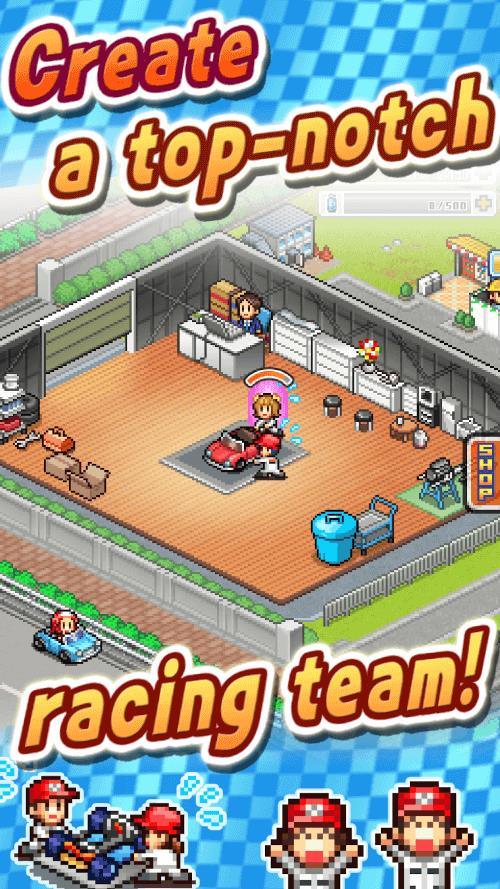
Grand Prix Story 2 places you in charge of a racing stable where managerial decisions matter as much as the races themselves, blending retro pixel visuals with accessible idle mechanics so you can make progress in short bursts or over longer sessions. The game emphasizes team building and strategic upgrades: recruit and assign drivers, invest in vehicle components and departments, and refine pit strategy to shave seconds off each stop. Grand Prix Story 2 is designed for players who enjoy lightweight strategy layered over racing themes, offering a steady stream of new events without demanding constant hands-on driving.
Gameplay centers on a loop of preparation and competition: plan your car setups, allocate resources to upgrades, and enter a variety of international events that increase in difficulty. Each race is affected by track surface and environment, so tuning decisions—such as balancing speed versus durability—have meaningful consequences. Between races you manage staff, direct training priorities for crew and drivers, and decide which departments to upgrade to improve long-term performance. The idle elements let you accumulate income and research progress while away, so sessions of different lengths all contribute to your championship goals.
The control scheme is intentionally simple and touch-friendly: navigate menus with taps, select upgrade paths and driver assignments through clear on-screen options, and adjust basic race strategies from straightforward panels. The interface highlights important stats and upgrade costs so you can compare choices quickly, and race results are presented in concise summaries that make it easy to see where to invest next. This minimal approach keeps the focus on strategy rather than complex input timing or skill-based driving.
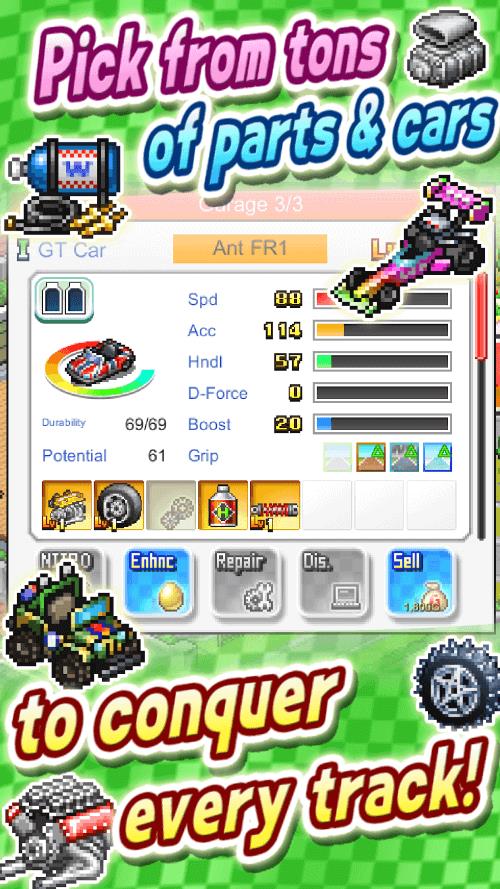
Progression in Grand Prix Story 2 is driven by vehicle components, staff development, and a currency system earned from race results and idle income. Upgrades unlock new capabilities for cars and departments, creating visible performance gains across speed, handling, and reliability. Drivers have roles and strengths that interact with your upgrade choices, so matching personnel to vehicle types becomes a tactical decision. Long-term planning is rewarded: clear upgrade trees and department tiers encourage steady investment rather than one-off spending.
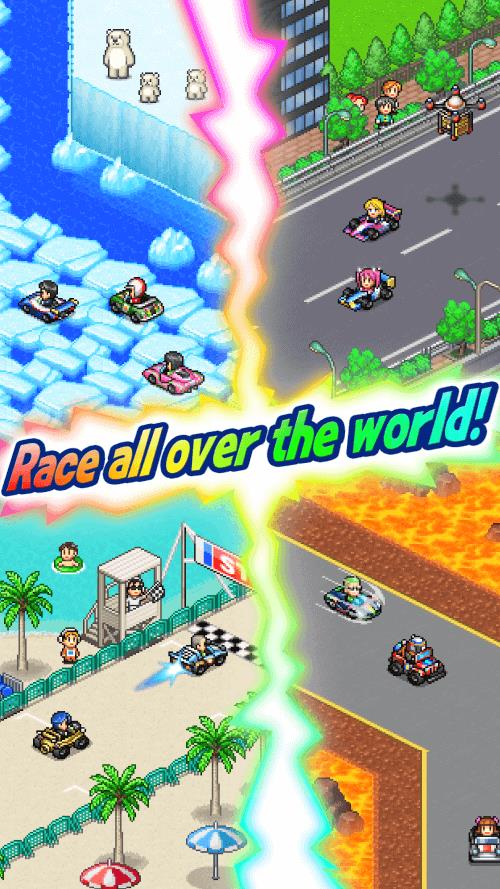
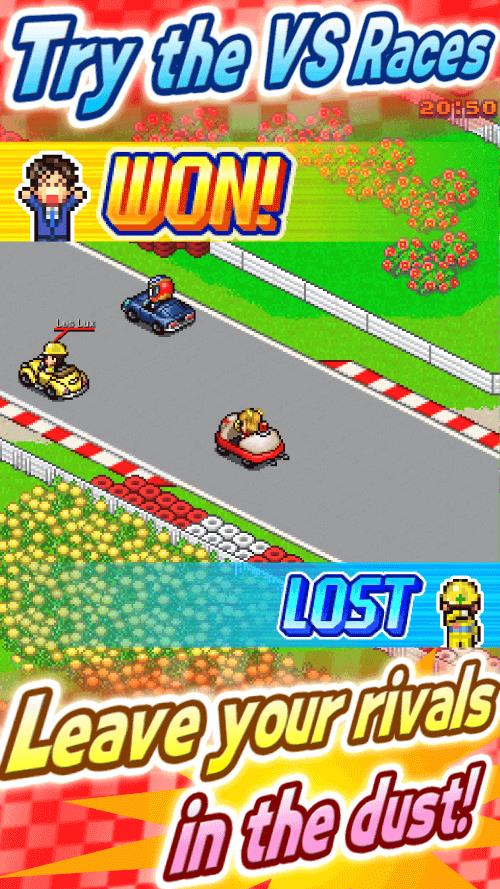
Events are organized into series that gradually increase in difficulty and variety, from arid deserts to icy tundra and open plains. Each region presents terrain-specific challenges that change how components perform, requiring you to adapt setups and pit priorities. Challenge systems are subtle but consistent: tougher opponents, longer race distances, and environmental effects test your upgrade path and crew efficiency as you climb through tiers. Replayable events and the possibility of optimizing different strategies promote experimentation without forcing repetitive play.
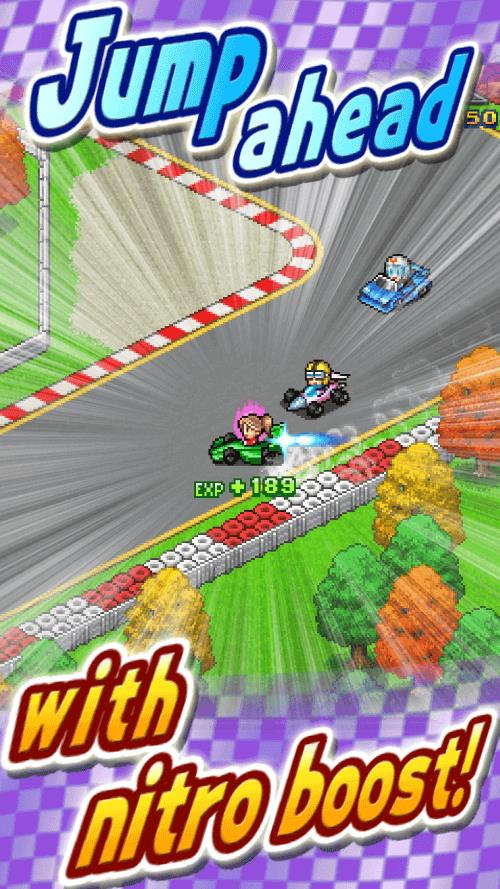
The game’s pixel-art presentation channels a nostalgic 2D aesthetic with careful attention to readable sprites and track detail, creating atmosphere without overcomplicating visuals. Backgrounds and track elements communicate surface types and weather at a glance, helping you make strategic choices before each race. An upbeat, retro-style soundtrack underscores the racing mood and keeps sessions lively, while concise sound cues provide feedback for upgrades, pit stops, and race outcomes.
Customization focuses on tuning and role assignment rather than complex cosmetic systems: you refine vehicle setups, choose which components to prioritize, and decide how to distribute training across your crew. These choices produce different playstyles, so returning to earlier events with a new strategy remains satisfying. The idle progression model, combined with branching upgrade paths and escalating event tiers, creates a steady loop of progression that encourages incremental improvement and long-term planning.
The game is approachable on a wide range of devices thanks to its straightforward controls and clean menus, making it suitable for brief commutes or relaxed sessions at home. Idle mechanics enable progress when you step away, and concise race summaries let you understand advancements quickly after returning. The overall design favors clarity and pace control, helping players tailor how much time they invest in each session.
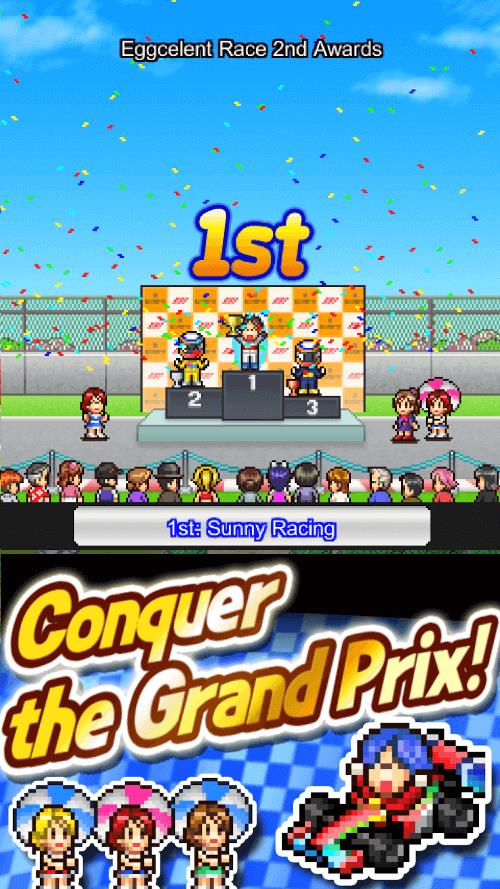
Expect a management-focused racing simulation with a retro look, strategic depth in upgrades and driver roles, and an idle-friendly pace that supports both short and extended play. Grand Prix Story 2 rewards thoughtful planning over reflex-driven racing and offers a layered progression system that remains engaging as events grow tougher and your stable evolves. If you appreciate tactical decisions, steady long-term growth, and pixel-art charm, this title delivers a compact, replayable racing management experience.
Farm Town: Merge Cozy Village
Size:177.00M SimulationSpeed Moto Dash:Real Simulator
Size:255.00M SimulationMA 2
Size:85.22M SimulationStates Builder: Trade Empire
Size:105.18M SimulationLEGO® Juniors Create & Cruise
Size:72.90M SimulationParadise Lust 3
Size:2178.00M SimulationJoy Pony
Size:20.40M SimulationStuck with My Ex’s Family and Zombies!?
Size:270.00M SimulationFreshman
Size:177.00M SimulationHomo Evolution
Size:48.00M SimulationThe Boss is Cumming
Size:298.00M SimulationHell Inc.: Tycoon Clicker Game
Size:52.40M SimulationApril 2024 Clash of Clans Update: Unveiling a Fresh Companion, Enhanced Levels, Chat Tagging, and Be
2024-04-16Arrival of Genshin Impact 4.6 Update: 'Embers of Two Realms, Twilight of Crimson'
2024-04-16V2.2 of the Farlight 84 update introduces an overhauled Season structure, fresh in-game currency, an
2024-04-16Monster Never Cry is now accessible on both Android and iOS mobile devices.
2024-04-18PUBG Mobile Teams Up with Bentley Motors: Luxury Cars, Exclusive Collectibles, and Beyond
2024-04-18March 2024 Free Redemption Codes for Honkai: Star Rail
2024-04-18