English
Universe Invader: Alien Attack drops you into a compact, tongue-in-cheek arcade shooter where quick reflexes and pattern recognition matter as much as raw firepower. In Universe Invader: Alien Attack the premise is simple: fend off waves of absurd, chicken-shaped invaders, stack power-ups and experiment with modular upgrades to find effective combinations. This editor overview explains core systems — from controls and progression to level design and replayability — so you know what to expect before installing.
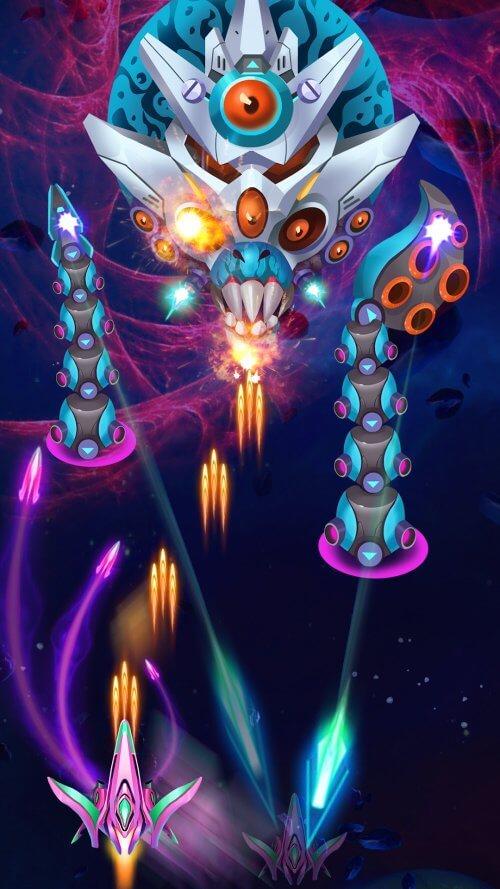
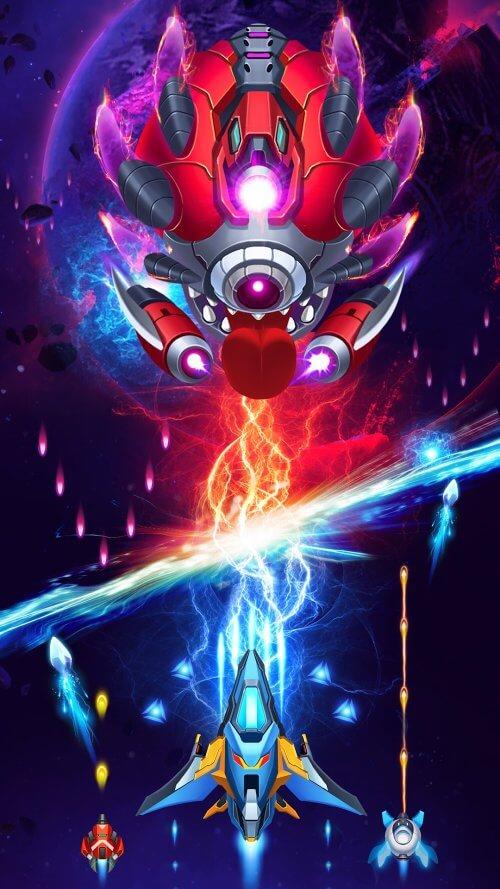
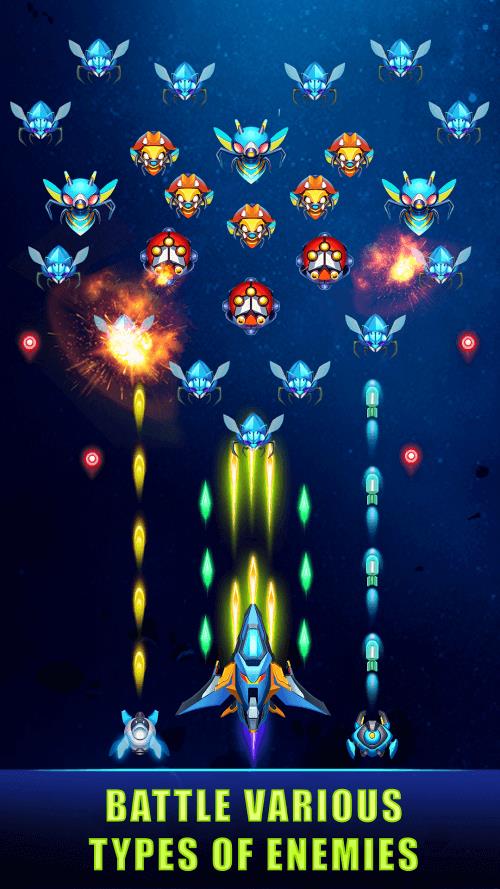
The game follows a classic shoot-'em-up loop that emphasizes readable chaos over randomness. Each stage sends distinct chicken-inspired enemy types with different behaviors: kamikaze rushers, coordinated swarmers, and long-range units that lay down sustained barrages. These variations force you to change tactics mid-run rather than relying on a single autopilot strategy. Power-ups appear regularly and can stack for short, decisive windows of advantage, while permanent upgrade modules collected across runs alter your ship's baseline capabilities. Boss encounters are designed as pattern puzzles — they present telegraphed attacks and narrow openings that reward observation and timing rather than brute force.
Controls are deliberately simple to suit touch-first play. Movement and firing rely on responsive touch gestures, and the input system minimizes latency so close calls feel fair. Hitboxes are tuned to balance precision and accessibility, reducing frustration during crowded sequences. The HUD is kept uncluttered: power-up indicators and cooldown meters are visible without blocking the action, and restart or retry options are quick to access so you can jump back into a run without tedious menus. Sessions are tailored for short bursts on the commute or longer grinding sessions when you want to farm upgrades and practice boss patterns.
Progression is driven by a wave-based advancement system and a growing catalog of modular upgrades that change how your ship behaves. As you clear levels you gain access to new modules and power-up types that can be mixed in different ways, encouraging experimentation rather than a single optimal build. Upgrades influence rate of fire, projectile spread, defensive fields and special attacks; combining modules with well-timed temporary power-ups creates distinct playstyles that suit different enemy configurations. The balance pairs immediate, run-based boosts with longer-term upgrades so both short runs and careful progression feel rewarding.
The visual approach favors clarity and personality over realism. Exaggerated silhouettes, bold colors and readable effects make it easy to track threats even when the screen fills with projectiles. Levels progress from open, simple arenas to denser stages that introduce environmental obstacles and tighter formations, which encourage lane control and movement discipline. Boss arenas increase verticality and include unique shapes that open and close safe paths, turning positioning into a strategic element. Animations focus on clear intent — attack wind-ups, projectile telegraphs and hit reactions — so you can learn through observation as much as through repeated practice.
Replayability is baked into the design through an endless campaign structure and a wide variety of enemy variants that alter how each run unfolds. Randomized power-up drops combined with the modular upgrade system ensure runs feel different: a new module can change how you approach swarms or prioritize targeting. The difficulty curve ramps gradually but can feel demanding if you skip upgrades, which encourages iterative learning and experimentation. Boss fights act as checkpoints for mastery, rewarding players who learn patterns and chain power-ups into rhythm-based windows of opportunity.
The game is built for mobile realities: it supports offline play so you can run sessions without a network connection, and its short-session design fits on-the-go moments. Visual clarity and predictable power-up behavior make the learning curve approachable for newcomers, while layered mechanics provide room for growth for experienced players. Sound and visual feedback deliver immediate information about damage, status effects and incoming threats, helping players recover or adjust strategy in the middle of a hectic run. Developers have also tuned controls and UI placement with hand comfort in mind, aiming to minimize accidental inputs during intense moments.
Universe Invader: Alien Attack is a compact, humor-tinged shooter that mixes straightforward touch controls, modular customization and escalating boss challenges into a replayable single-player package. If you enjoy short, skill-driven arcade sessions with room to experiment and adapt, this title offers a balanced, approachable experience that rewards practice and creative use of upgrades.
Caravan SandWitch
Size:828.93M Shooting#BLUD
Size:3942.00M ShootingRioRise
Size:179.52M ShootingDésiré
Size:2.00M ShootingBall Blast Cannon blitz mania
Size:84.60M ShootingMinions Horror
Size:421.80M ShootingKiss of Sin: Rewinding Flame
Size:903.00M ShootingCane and Able
Size:268.00M ShootingCubeCrafter
Size:156.10M ShootingCursed Forest Quest
Size:794.00M ShootingThe Innocent
Size:235.00M ShootingThirsty Society
Size:558.46M ShootingApril 2024 Clash of Clans Update: Unveiling a Fresh Companion, Enhanced Levels, Chat Tagging, and Be
2024-04-16Arrival of Genshin Impact 4.6 Update: 'Embers of Two Realms, Twilight of Crimson'
2024-04-16V2.2 of the Farlight 84 update introduces an overhauled Season structure, fresh in-game currency, an
2024-04-16Monster Never Cry is now accessible on both Android and iOS mobile devices.
2024-04-18PUBG Mobile Teams Up with Bentley Motors: Luxury Cars, Exclusive Collectibles, and Beyond
2024-04-18March 2024 Free Redemption Codes for Honkai: Star Rail
2024-04-18