English
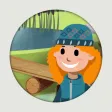
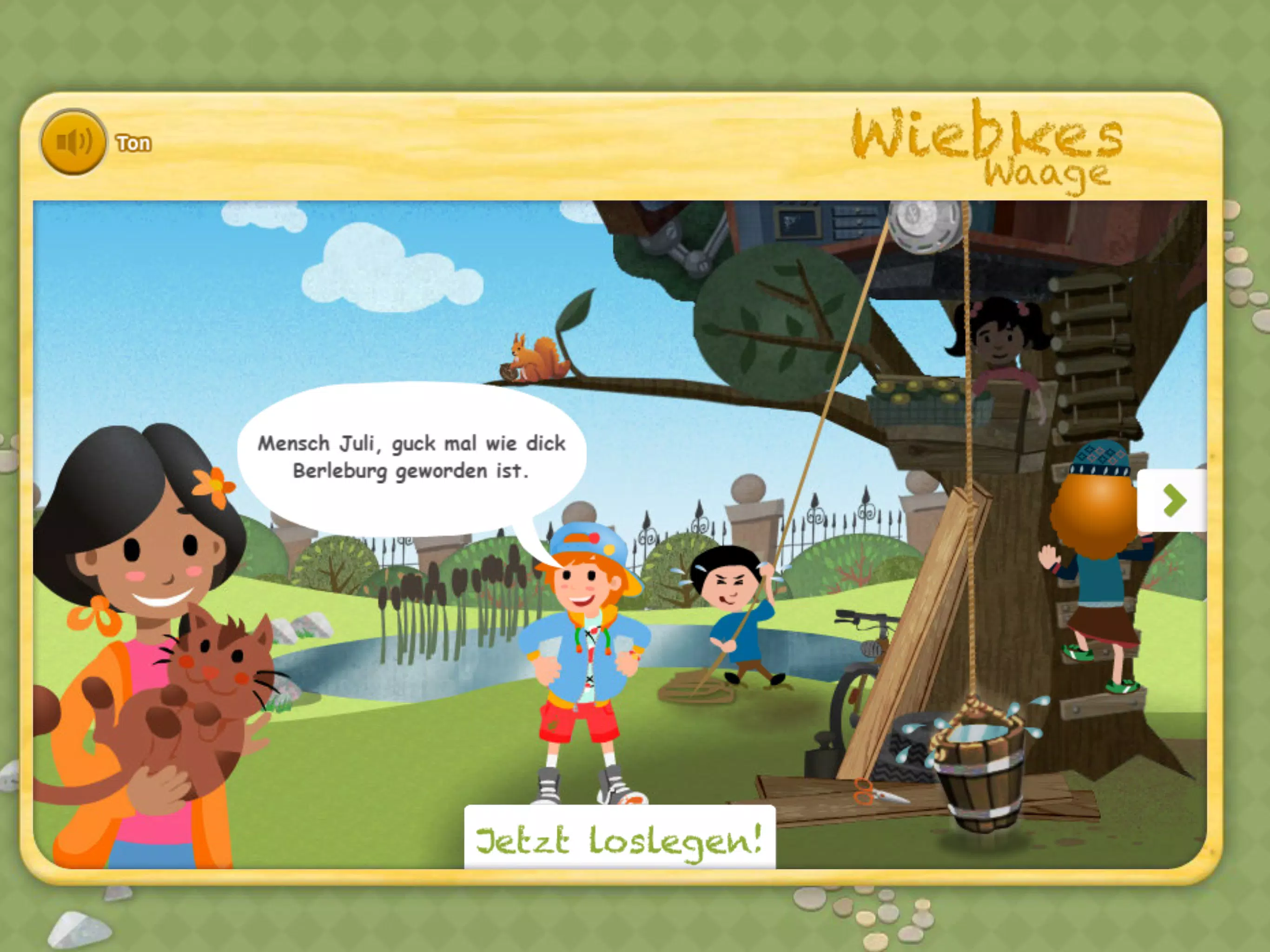
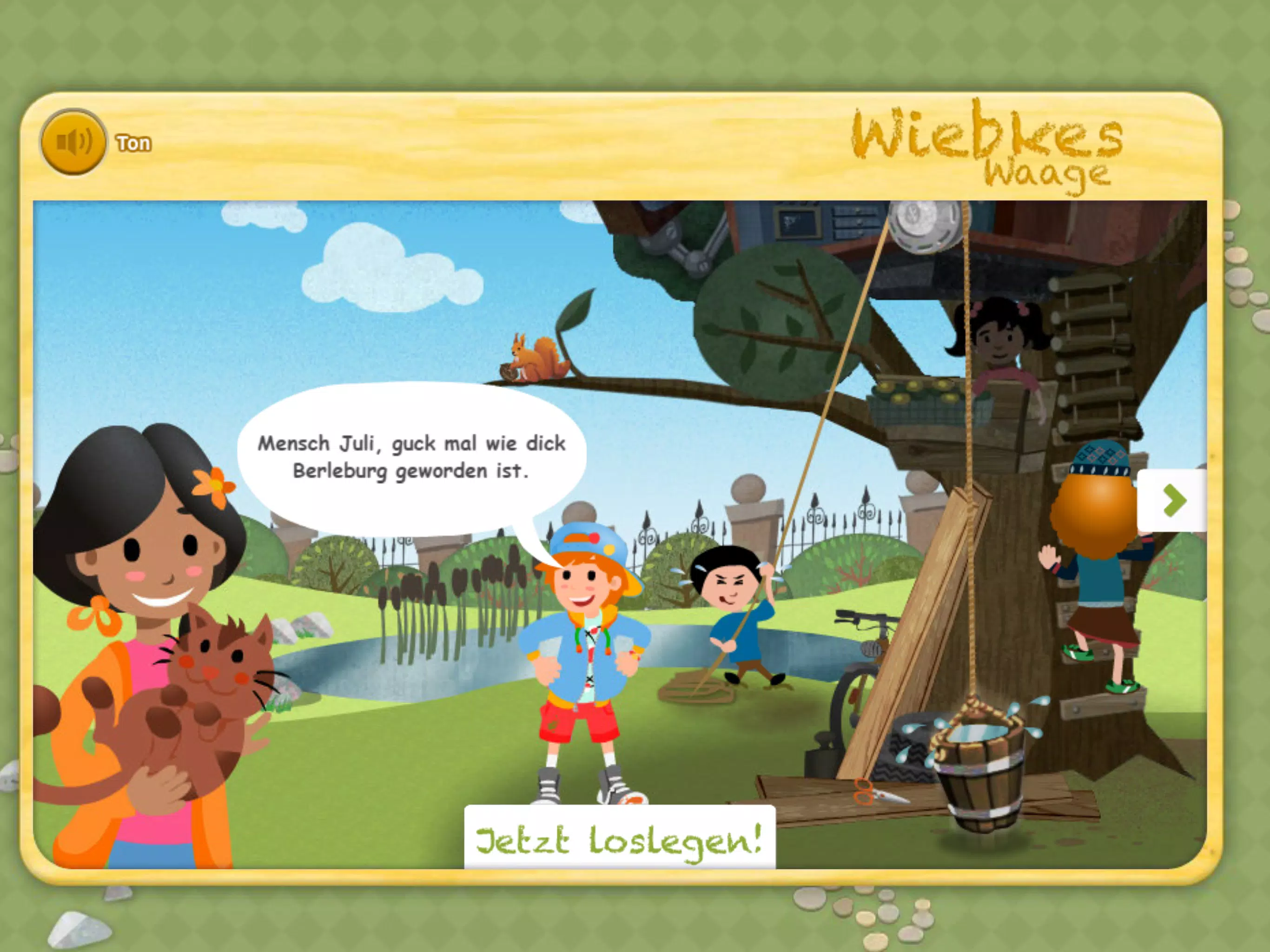
Wiebkes Waage is an educational app that brings hands-on balance experiments to tablets and phones, turning simple household items and animal illustrations into a playful introduction to weight and equilibrium. Wiebkes Waage places emphasis on observation, low-tech creativity and collaborative learning so parents and teachers can guide children through practical activities that illustrate core physics ideas without complex controls or precise instrumentation. The app is designed to be approachable for young learners while offering layered challenges that keep older children curious and engaged.
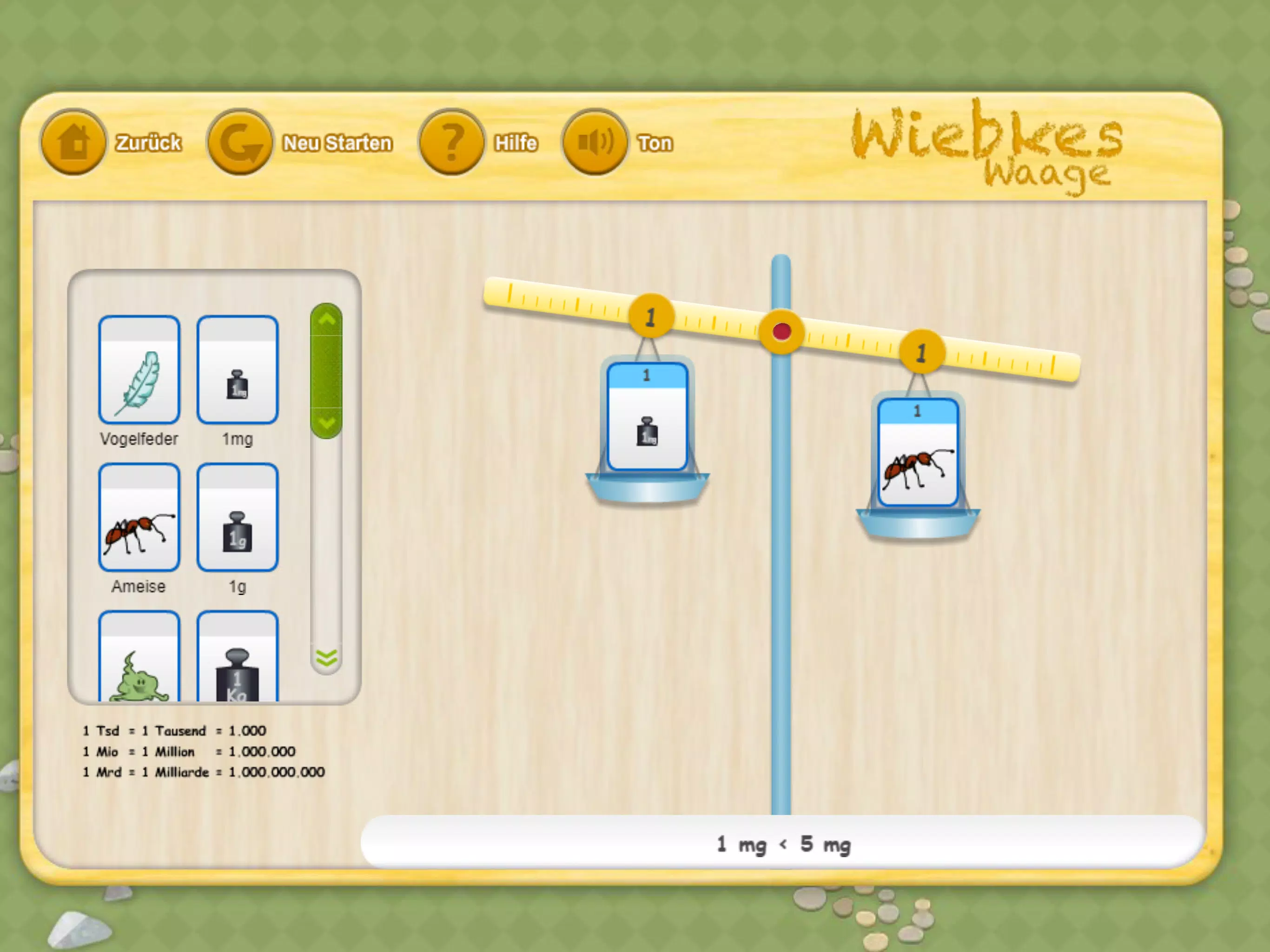
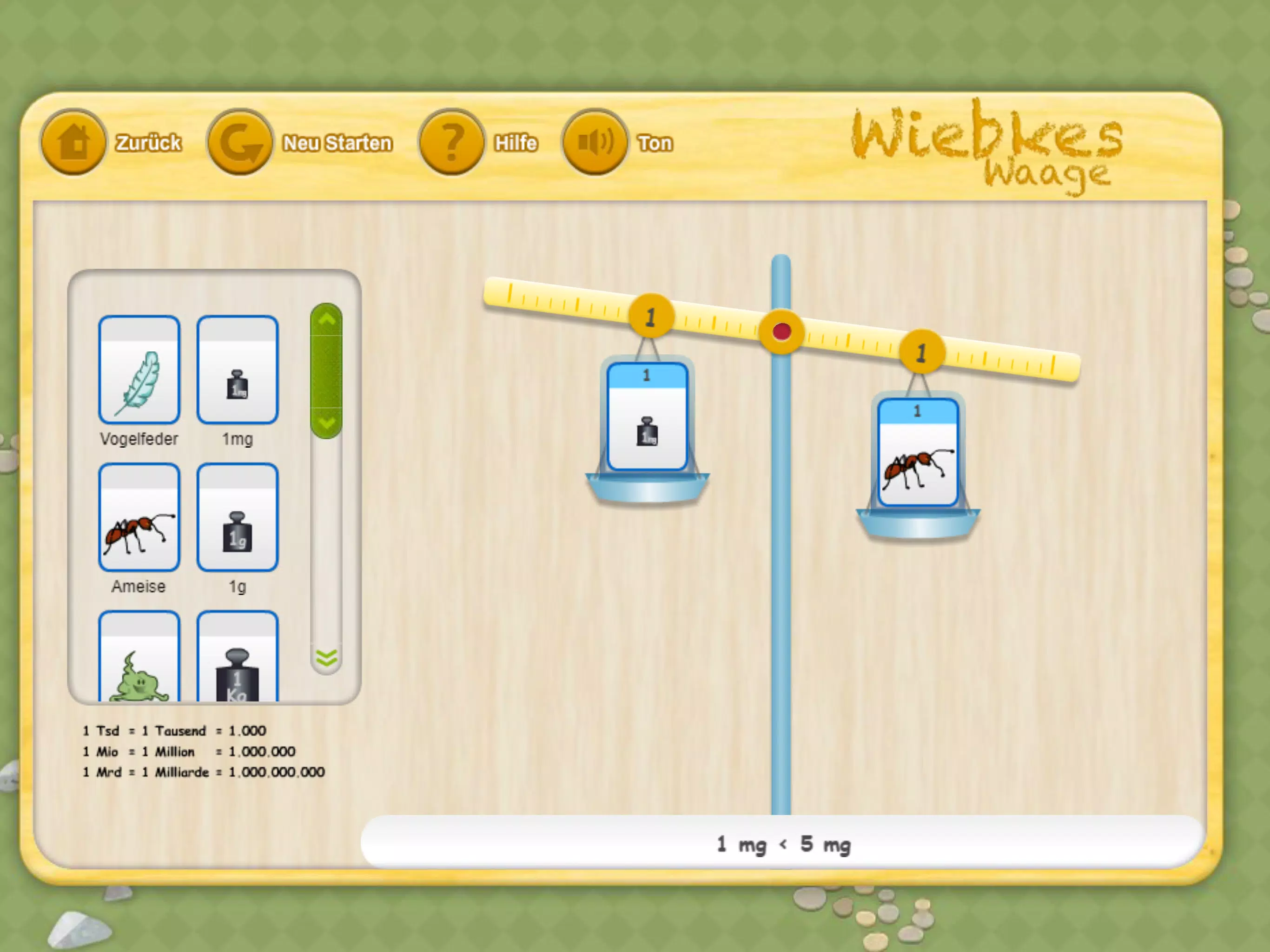
The app models a series of homemade scales and balance scenarios inspired by family-style experiments. Each scenario presents a pivot, a beam and a set of objects or animal figures with visual weight cues; users arrange items on either side to explore how placement and mass affect balance. Instead of advanced simulations, the app focuses on qualitative understanding: how different combinations tip, balance, or find equilibrium. Short guidance prompts encourage prediction, testing, and reflection so learners practice scientific thinking while they play.
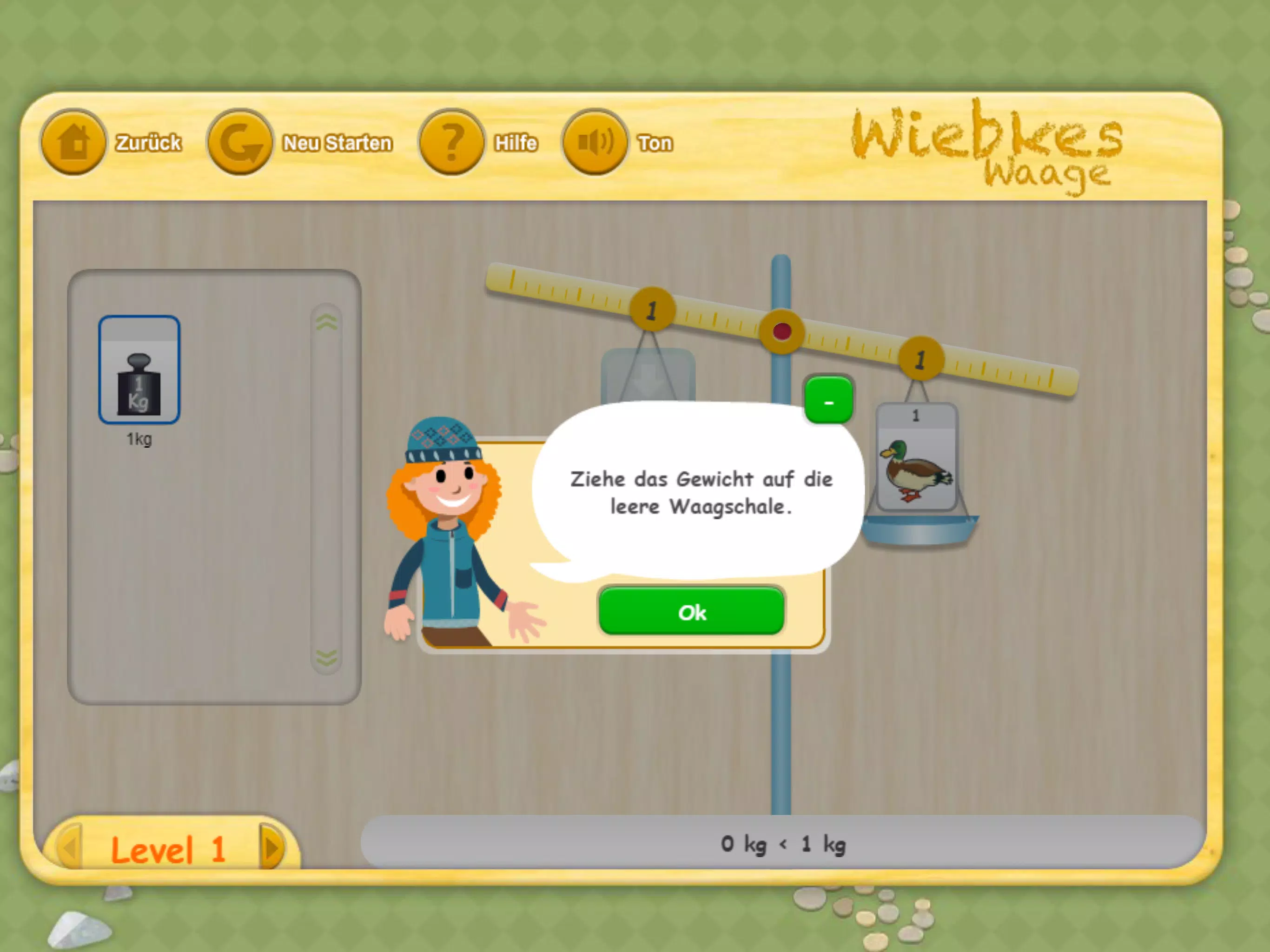
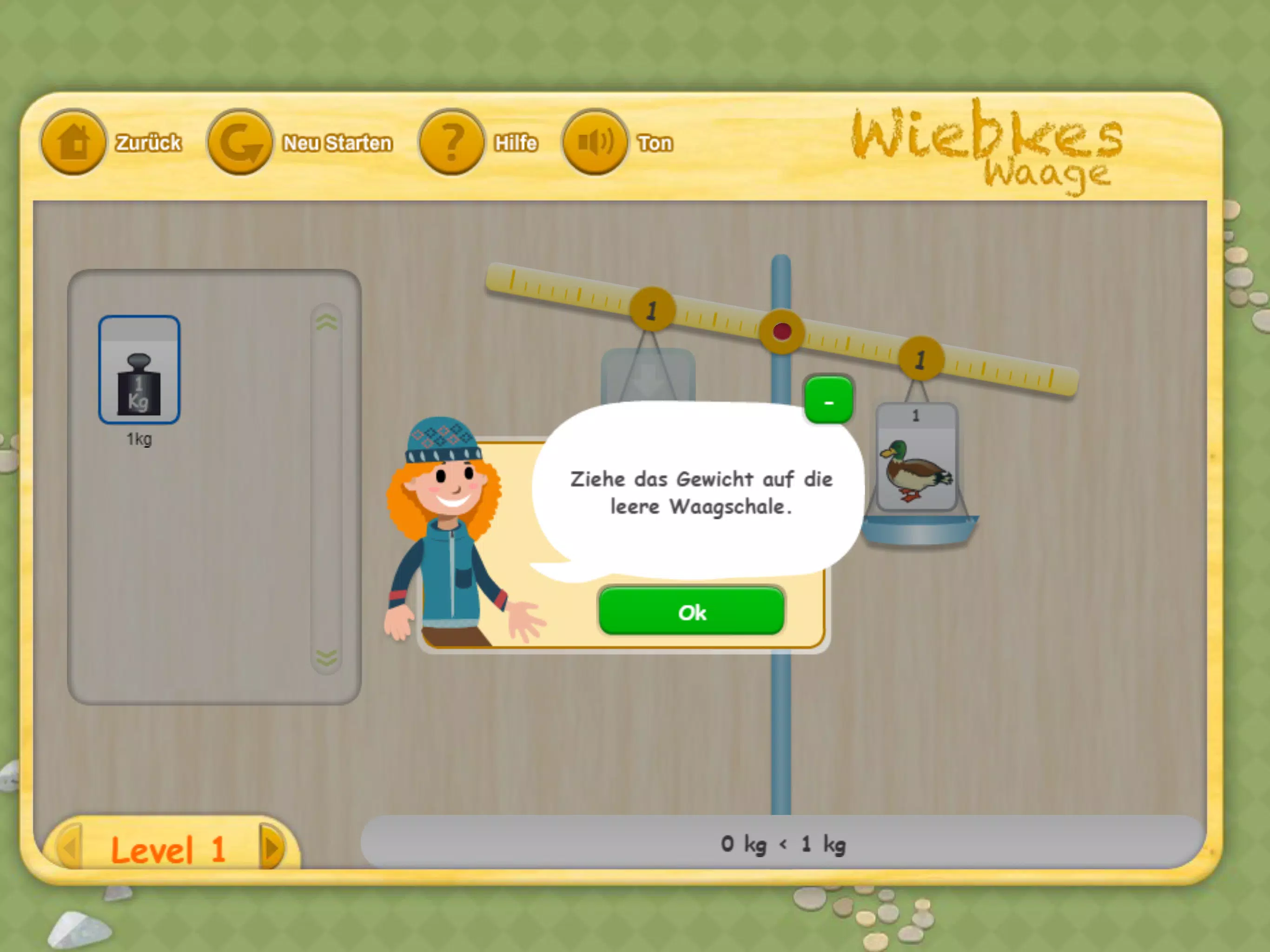
Gameplay is deliberately simple and tactile. Players tap an object to pick it up and drag it onto the beam, move the pivot point to change leverage, and remove or swap items to observe the resulting motion. Subtle animations show the beam tilting and settling, and a visual indicator highlights when the system is balanced. Controls are responsive to touch and suitable for little hands; large touch targets and forgiving drag mechanics reduce frustration. The interface avoids menus with complex options, keeping the focus on experimentation rather than navigation.
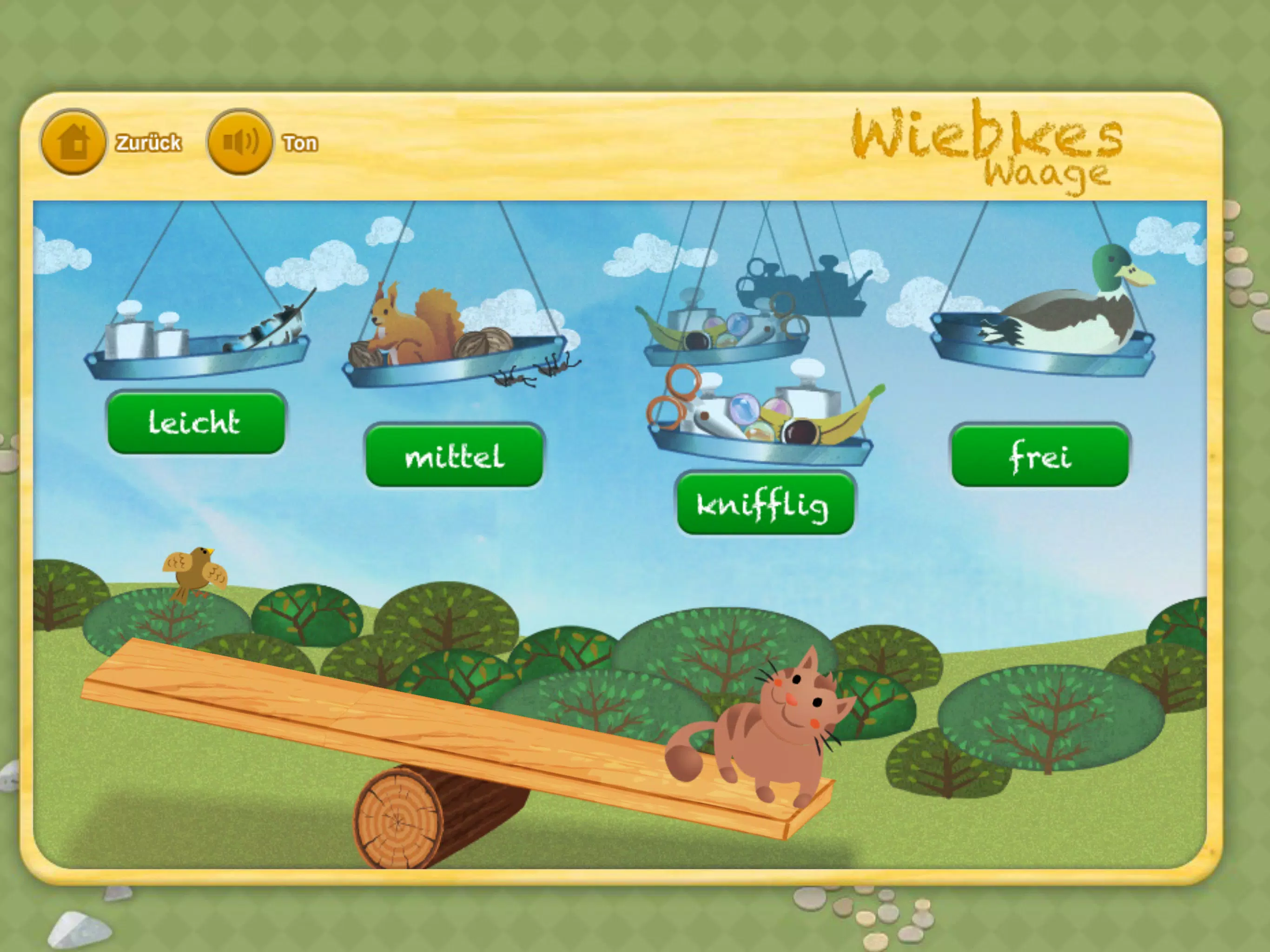
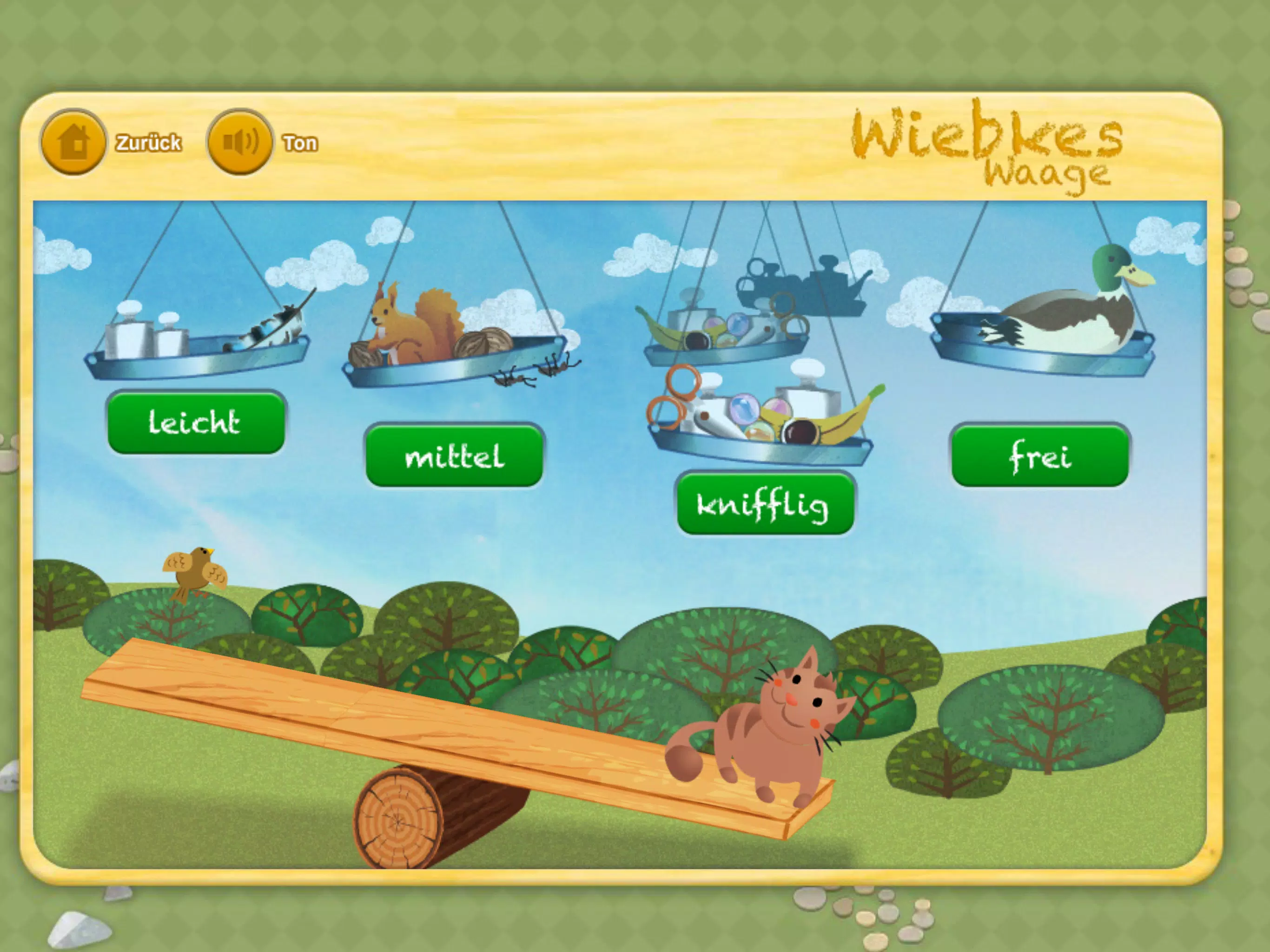
Progression is structured as a series of short challenges that gradually introduce new concepts. Early levels focus on direct comparisons—light versus heavy—while intermediate levels introduce offset placement and simple lever principles. Advanced scenarios require multi-object arrangements and problem solving to achieve balance under constraints, such as limited objects or fixed pivot positions. Each level includes optional hints and a reset button so children can iterate quickly. Completion is tracked locally through a simple checkpoint system that opens new challenge packs as players demonstrate understanding.
The visual approach is minimal and warm, with hand-drawn illustrations and soft colors that echo the homemade scale theme. Objects and animals are stylized rather than hyper-realistic to keep the focus on relationships and outcomes. A customization panel lets users change the beam material, swap object skins, and select different background scenes for variety; these cosmetic changes do not affect the underlying mechanics but help maintain engagement. The clean layout and consistent visual language support quick comprehension of cause and effect during experiments.
Replay value comes from a sandbox mode alongside the structured challenges. In sandbox, users build their own scales, choose combinations of items and experiment freely without level constraints. Challenge packs include randomized object sets and time-limited puzzles for a different test of reasoning on repeat plays. Because the app emphasizes exploration and trial-and-error, many activities invite multiple solutions and encourage revisiting earlier tasks with new strategies, reinforcing learning through practice rather than single-pass completion.
Accessibility is a priority: large text options, high-contrast visuals, and colorblind-friendly palettes are available to accommodate different needs. Hints are offered as short, plain-language prompts to support emergent readers, and touch targets are sized for families using tablets in shared settings. Wiebkes Waage works fully offline after installation so it can be used in classrooms, on trips, or anywhere a parent or teacher wants a quick, device-based activity without relying on network access. The app stores progress locally and requires no account setup.
The app is intended for preschoolers through elementary-aged children and for adults who facilitate learning: parents, caregivers and teachers. Typical learning outcomes include an intuitive grasp of balance and leverage, improved observational skills, basic problem-solving habits, and confidence with simple experimental cycles—predict, test, observe, revise. The tone is supportive rather than didactic, encouraging curiosity and collaborative discovery.
Wiebkes Waage grew from a family practice of making homemade scales and noting how accessible hands-on physics can be with everyday objects. The development team worked with educators to shape lessons and interactions that favor exploration over precise measurement. The app intentionally avoids advanced measurement tools and complex simulations, keeping its strength in low-tech charm and teachable moments that invite real-world follow-up activities with household items.
LifeUp: Gamified To Do List
Size:17.35M ProductivityVPN Proxy Speed
Size:53.00M ProductivityAI Logo Generator (LogoWiz)
Size:41.50M Productivity3D Logo Maker
Size:39.30M ProductivityAI Chat: Ask AI Chat Anything
Size:42.20M ProductivityStars and Planets
Size:116.42M ProductivityImageMeter
Size:119.22M ProductivityHabitKit
Size:56.87M ProductivityMy Passwords Manager
Size:10.60M ProductivitymiMind
Size:48.30M ProductivityCute Note DDay Todo
Size:15.31M ProductivityCleverType AI Keyboard
Size:33.83M ProductivityApril 2024 Clash of Clans Update: Unveiling a Fresh Companion, Enhanced Levels, Chat Tagging, and Be
2024-04-16Arrival of Genshin Impact 4.6 Update: 'Embers of Two Realms, Twilight of Crimson'
2024-04-16V2.2 of the Farlight 84 update introduces an overhauled Season structure, fresh in-game currency, an
2024-04-16Monster Never Cry is now accessible on both Android and iOS mobile devices.
2024-04-18PUBG Mobile Teams Up with Bentley Motors: Luxury Cars, Exclusive Collectibles, and Beyond
2024-04-18March 2024 Free Redemption Codes for Honkai: Star Rail
2024-04-18